The first hot-shot load that looks like a win can turn costly if the trailer doesn’t fit, the pickup timing is unrealistic, or the return route leaves you with too many empty miles. Learning how to find hot shot loads in Texas means looking beyond the posted rate and checking whether the whole trip makes sense.
Texas freight opportunities connect to industries such as oil and gas, construction, and manufacturing. But finding a workable load takes a consistent search and careful screening. The key is to check each lead against your equipment, route, schedule, and business costs before you agree to haul it.
This guide covers where to look, how to compare a load with your truck-and-trailer setup, and what to clarify before you accept. You’ll also learn how to account for deadhead miles, route, timing, and operating expenses, then turn those checks into a repeatable routine. Practical preparation matters too: hot-shot driver training can help you build the skills and habits needed to work safely around freight.
Key Takeaways
- Use load boards, brokers, shipper relationships, and referrals as complementary ways to look for freight. They are not interchangeable sources.
- Build a repeatable routine for how to find hot shot loads in Texas, and track searches and follow-ups so promising leads don’t get lost.
- Compare equipment fit, route, timing, deadhead miles, payment terms, and contact details before deciding whether a load makes business sense.
- Search lanes around your home base, including Dallas-Fort Worth, Dallas, Mansfield, and Fort Worth, while considering realistic driving plans and return-trip options.
- Prepare for the work as well as the search. Hot-shot driver training can support safe operation, sound planning, and professional service.
How hot-shot loads reach Texas drivers, and why one source is not enough
A hot-shot load is freight moved with a truck-and-trailer combination suited to the shipment’s requirements. The work can involve time-sensitive deliveries or freight with specific size, weight, or handling needs. There isn’t one trailer type that fits every load. Before responding to a listing, compare its details with your actual equipment and operating capabilities.
The question isn’t just where loads appear. It’s how to find hot shot loads in Texas while keeping several sources in view and treating each opportunity as something to assess, not an automatic booking decision.
What counts as a hot-shot load?
Hot-shot freight often involves shipments that need direct, timely transportation, but the freight itself can vary. One listing may require a particular deck or trailer configuration; another may have different dimensions, weight, securement, or pickup requirements. Don’t assume a load fits just because it’s labeled “hot shot.”
Compare the listed shipment with your truck and trailer. Can your setup carry the freight safely? Do the load’s size and configuration suit your equipment? Are the pickup and delivery details workable? If key details are missing, get clarity before making a commitment. A listing describes a possible shipment, not proof that your rig is right for it.
Where Texas hot-shot operators can look for freight
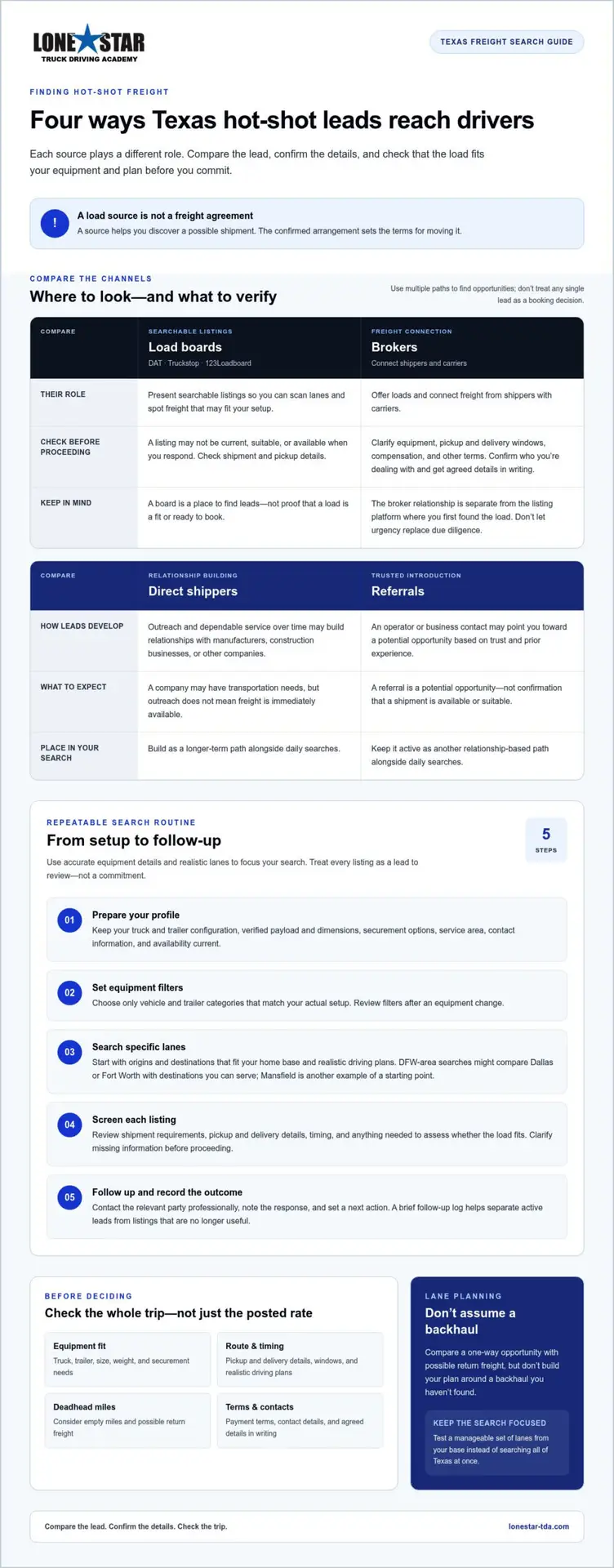
Load boards, brokers, direct shippers, and referrals can all lead to opportunities, but they serve different roles. Load boards such as DAT, Truckstop, and 123Loadboard present searchable listings. They can help you scan lanes and spot freight that may fit your setup. A board is a place to find leads, not a guarantee that a listing is current, suitable, or available when you respond.
Brokers connect freight from shippers with carriers. A broker may offer a particular load, but that relationship is separate from the listing platform where you first saw it. Communicate clearly about equipment, pickup and delivery windows, compensation, and other terms. Confirm who you’re dealing with and get the agreed details in writing before accepting. Don’t let urgency replace basic due diligence.
Direct shipper relationships develop through outreach and dependable service over time. A manufacturer, construction business, or other company may have transportation needs, but contacting a shipper doesn’t mean freight is immediately available. Referrals work differently: another operator or business contact may point you toward a potential opportunity based on trust and prior experience. Keep both approaches active as longer-term relationship building alongside daily searches.
A load source is where you discover a possible shipment; a freight agreement is the confirmed arrangement that sets the terms for moving it. Keep that distinction in mind. Whether a lead comes from a board, broker, shipper, or referral, evaluate the fit and clarify the agreement before you commit. A balanced search gives you more than one path to explore without making any single source your entire plan.
Follow a repeatable search routine to find hot-shot loads in Texas
A steady routine helps you compare opportunities without relying on memory or chasing every new listing. To learn how to find hot shot loads in Texas, organize your search around what your equipment can handle, the lanes you can realistically drive, and consistent follow-up. Treat each listing as a lead to review, not a commitment.
Set up searches around your actual truck and trailer
Start with a short capability profile based on your actual setup. Record your truck and trailer configuration, verified payload and dimensions, and the securement options you can provide. Keep the details current and use them when setting equipment filters or speaking with a broker or shipper. Accurate filters can narrow the results; selecting equipment you don’t have wastes time and can create confusion.
- Prepare your profile. Keep your equipment details, service area, contact information, and availability in one place. Use the same accurate information across the load sources you use.
- Set equipment filters. Choose only the vehicle and trailer categories that match your setup. Review the filters after changing equipment so your searches don’t keep returning unsuitable listings.
- Search specific lanes. Start with origins and destinations that fit your home base and realistic driving plans. A DFW-area operator might compare listings from Dallas or Fort Worth with destinations they can serve, rather than searching all of Texas at once.
- Screen each listing. Check shipment requirements, pickup and delivery details, timing, and the information needed to assess whether the load fits. If an important detail is unclear, get clarification before proceeding.
- Follow up and record the outcome. Contact the relevant party professionally, note the response, and set a next action. A brief follow-up log helps you distinguish active leads from listings that are no longer useful.
Search lanes and manage follow-up consistently
Test a manageable set of lanes from your base, such as Mansfield to another Texas destination or Fort Worth toward a nearby market. Compare the one-way opportunity with possible return freight, but don’t build your plan around a backhaul you haven’t found. Saved searches or alerts can reduce repeated manual checks when a platform offers those features.
For each lead, record the search date, origin, destination, equipment, contact, and next action. Add a short note about the response, such as “awaiting shipment details” or “follow up after availability changes.” This simple record helps you return to useful contacts without sending duplicate messages or losing track of an unanswered inquiry.
In short: prepare your profile, filter for your equipment, search realistic lanes, screen each listing, and record the follow-up. Keep safe operation and professional preparation in view alongside the search. The Federal regulations for hotshot trucking are a useful reference when reviewing applicable federal requirements. Drivers preparing for this work can also explore hot-shot driver training as part of building practical skills for freight work.
Compare hot-shot loads by fit, route, and real business value
A posted payment is only one part of a load decision. Before accepting, compare the freight with your equipment, map the full trip, check the schedule and terms, and account for miles and expenses that won’t appear in the listing. Consistent screening turns how to find hot shot loads in Texas into a business decision, not a race to accept the highest advertised amount.
Check equipment, shipment details, and timing
Use the shipment’s stated dimensions, weight, and handling expectations to judge whether it matches your truck and trailer’s verified capabilities. Confirm the pickup and delivery locations, time windows, and service expectations. A “hot shot” label doesn’t tell you whether your specific setup can handle the freight or whether the schedule is workable.
| Check | What to assess | Pause if |
|---|---|---|
| Equipment fit | Shipment dimensions, weight, handling, and your verified vehicle and trailer limits | Requirements exceed your capabilities or key freight details are missing |
| Route | Loaded miles, practical driving plan, and where you’ll finish | The route or delivery location creates an impractical next move |
| Timing | Pickup and delivery windows, transit time, and stated service expectations | The schedule appears unrealistic or conflicts with other commitments |
| Deadhead | Unpaid miles to pickup and likely repositioning after delivery | The trip includes substantial unpaid travel you haven’t accounted for |
| Terms | Agreed payment, responsibilities, and any shipment-specific conditions | Important terms are unclear or only discussed verbally |
| Contact clarity | Who you’re speaking with and how to reach them about the shipment | Contact details or the person responsible for confirming terms are unclear |
Ask for written clarification when freight details, payment terms, access instructions, or timing are vague. You don’t need to force a decision while essential information is missing. Clear details help both sides understand what has been agreed to before the truck is dispatched.
Estimate the trip’s practical business value
Start with the full movement, not just the loaded miles. Include travel to the pickup, the loaded route, and any repositioning you may need afterward. Then use your own figures for fuel, tolls, time, and other operating expenses. Costs differ by equipment and operation, so a universal rate or profit formula won’t tell you whether a specific trip works for your business.
For example, a load from Dallas to a destination outside your usual lanes may look attractive on its face, but the return plan matters. Check whether another suitable opportunity is actually available, or assess the trip assuming you may need to travel empty. Keep confirmed payment terms separate from estimates about future freight or expenses.
A load’s suitability depends on equipment fit, the full route, timing, terms, and operating costs, not just its advertised rate. Use that test consistently. If the numbers or details don’t add up yet, pause and clarify before committing.
Use Texas routes and due diligence to narrow your load search
Texas is a large operating area, so a broad statewide search can return loads that don’t make sense from your starting point. A more useful approach is to build searches around where you can actually begin, which destinations fit your driving plan, and what options you may have after delivery. Dallas-Fort Worth, Dallas, Mansfield, and Fort Worth are practical examples for shaping a search, not guaranteed freight hubs.
Build Texas lane searches around where you can actually operate
Start with your home base and nearby pickup locations. A driver based near Mansfield might compare loads originating nearby with opportunities from Dallas or Fort Worth, then consider whether the destination fits the rest of the plan. If you can serve longer interstate routes, include those too, but account for the extra travel and what it takes to get back toward your preferred area.
Use location filters and saved searches when your selected platform supports them. Keep searches focused enough to surface workable options, then adjust the origin or destination when your schedule or operating area changes. Don’t assume a return load will be available. Treat possible backhaul freight as an option to investigate, not a guaranteed part of the trip.
Screen brokers and load details before making a commitment
Before agreeing to move freight, verify the broker or company and the person handling the shipment. Compare their contact details with reliable sources and available business records. Then review the written load terms carefully. Make sure the agreed payment arrangement and service expectations are clear, including any stated accessorial charges or cancellation conditions.
Confirm shipment details with the same care: pickup and delivery addresses, timing, freight description, equipment requirements, and the right contact at each location. If information conflicts or is missing, pause and request clarification in writing. Clear records help prevent misunderstandings about what you agreed to carry and where or when the shipment is expected.
Operating requirements can depend on the details of your vehicle, freight, and route. Before relying on a rule, check current guidance from the Federal Motor Carrier Safety Administration and relevant Texas state agencies. Verify requirements that apply to your operation, including carrier, insurance, and operating rules, rather than assuming another driver’s setup is the same as yours.
Verify the counterparty, shipment details, and written terms before you commit. That pause is part of learning how to find hot shot loads in Texas responsibly. A promising route is only worth pursuing if the people, paperwork, and operating plan hold up.
Learn about hot-shot driver training
Prepare for hot-shot work with training before pursuing loads
Finding a listing and being ready to haul it are different parts of the work. Professional hot-shot driving calls for sound vehicle control, good judgment, and a clear understanding of your responsibilities on the road. Training can help prepare you for those demands, while load availability and career outcomes depend on factors beyond the training itself.
Build the skills that support professional hot-shot driving
Start by matching your training plan to the vehicle you intend to operate and the work you hope to pursue. CDL class requirements depend on the specific vehicle combination and applicable rules. Endorsements may be relevant for certain types of driving or freight, but they aren’t automatically needed for every hot-shot operation. Check current official requirements for your situation before deciding what credentials to pursue.
If your goals involve operating a manual-transmission commercial vehicle, consider whether manual training fits your licensing and career plans. Building confidence with vehicle control and other practical driving skills can support a range of commercial driving opportunities, though no training guarantees a particular job. Lone Star Truck Driving Academy’s hot-shot driver training provides focused preparation for drivers interested in this type of work.
Turn freight searching into a steady business routine
Set a regular time to review your saved searches, contact notes, and lane results. Notice whether the opportunities you find fit your equipment and schedule, then refine your search if they don’t. This keeps your freight routine connected to the operation you can actually run, rather than pushing you toward loads that fall outside your capabilities.
As you gain experience, the habits you build around preparation, communication, and safe driving can help you present yourself professionally to potential business contacts. Treat training and freight searching as complementary parts of getting ready, not as a promise of work.
If you’re preparing for hot-shot driving, choose training that aligns with your vehicle and goals. A thoughtful next step can help you approach future opportunities with stronger skills and a clearer plan.
Build your next step on solid preparation
Building a hot-shot operation takes more than finding a promising listing. It takes preparation, sound judgment, and a routine you can maintain as your experience grows. As you consider how to find hot shot loads in Texas, make readiness part of the plan: understand your equipment, strengthen your driving skills, and approach each opportunity professionally.
Lone Star Truck Driving Academy offers hot-shot driver training, along with CDL programs, permit preparation, ELDT theory certification, and authorized on-site testing. Training is available for prospective drivers in Dallas, Mansfield, Fort Worth, Arlington, Denton, Greensboro, High Point, Winston-Salem, and Burlington. The right preparation depends on your goals and the vehicle you plan to operate. Training can help you develop practical skills, but freight decisions and career outcomes remain your responsibility.
Explore training that fits your plans and take a practical next step toward hot-shot driving.
With a clear plan and a commitment to professional driving, you can approach the work with greater confidence and make informed decisions as opportunities arise.
Frequently Asked Questions
Can you find hot-shot loads in Texas without using a load board?
Yes. A load board isn’t required to haul freight. Without one, though, you may have fewer listings to browse in one place, so building ongoing business connections becomes more important. Treat a referral or repeat-customer opportunity with the same care as any other lead, and make sure the shipment is suitable for your operation before agreeing to move it.
How do new hot-shot drivers get their first loads?
New drivers usually have to develop opportunities through consistent outreach and a professional approach, but no method guarantees a first booking. For an early job, prioritize freight you understand and can handle confidently rather than taking on unfamiliar requirements just to get started. A completed trip can also help you build a record of dependable communication and service for future conversations.
Are hot-shot loads available in Texas year-round?
Listings can appear throughout the year, but that doesn’t mean freight will be consistently available in every area or on every lane. Texas opportunities may be connected to industries such as oil and gas, construction, and manufacturing, whose needs can vary by location and project. Keep your business plan flexible, and don’t base fixed expenses on an assumption of steady weekly bookings.
How much do hot-shot loads pay in Texas?
There’s no single pay amount that applies to every hot-shot load in Texas. The offer depends on the particular shipment and the terms agreed for that trip. Ask for the specific payment amount before accepting, and avoid treating an advertised rate as a promise of what every similar load will pay. Your own completed-trip records can help you compare actual results over time.
Do I need a CDL to haul hot-shot loads in Texas?
A CDL is generally required when the truck-and-trailer combination has a gross combination weight rating of 26,001 pounds or more. That rating refers to the vehicle combination, not simply the freight’s actual weight. If your setup is near the threshold or you’re unsure how it applies, check current FMCSA and Texas guidance for your vehicle and operation before hauling.
What should I have ready before contacting a freight broker?
Prepare basic carrier and payment-onboarding information, along with current insurance documents and an accurate description of your equipment. Brokers may request different paperwork, so keep records organized and provide only information that relates to their onboarding process. You should also be ready to describe the freight you can handle and the areas you can serve, without overstating your equipment’s capabilities.
Article by
Lone Star Truck Driving Academy Training Team
Lone Star Truck Driving Academy provides CDL training for students throughout Texas and North Carolina. Our training team specializes in Class A CDL training, Class B CDL training, CDL refresher programs, automatic restriction removal, third-party testing support, and workforce development partnerships designed to help students build successful careers in the transportation industry.
Training Information Notice
The information provided in this article is for general educational purposes only. Program availability, tuition, licensing requirements, testing procedures, endorsement requirements, and regulatory standards may change over time. Prospective students should contact Lone Star Truck Driving Academy directly to verify current program details, admissions requirements, and state-specific CDL regulations.