
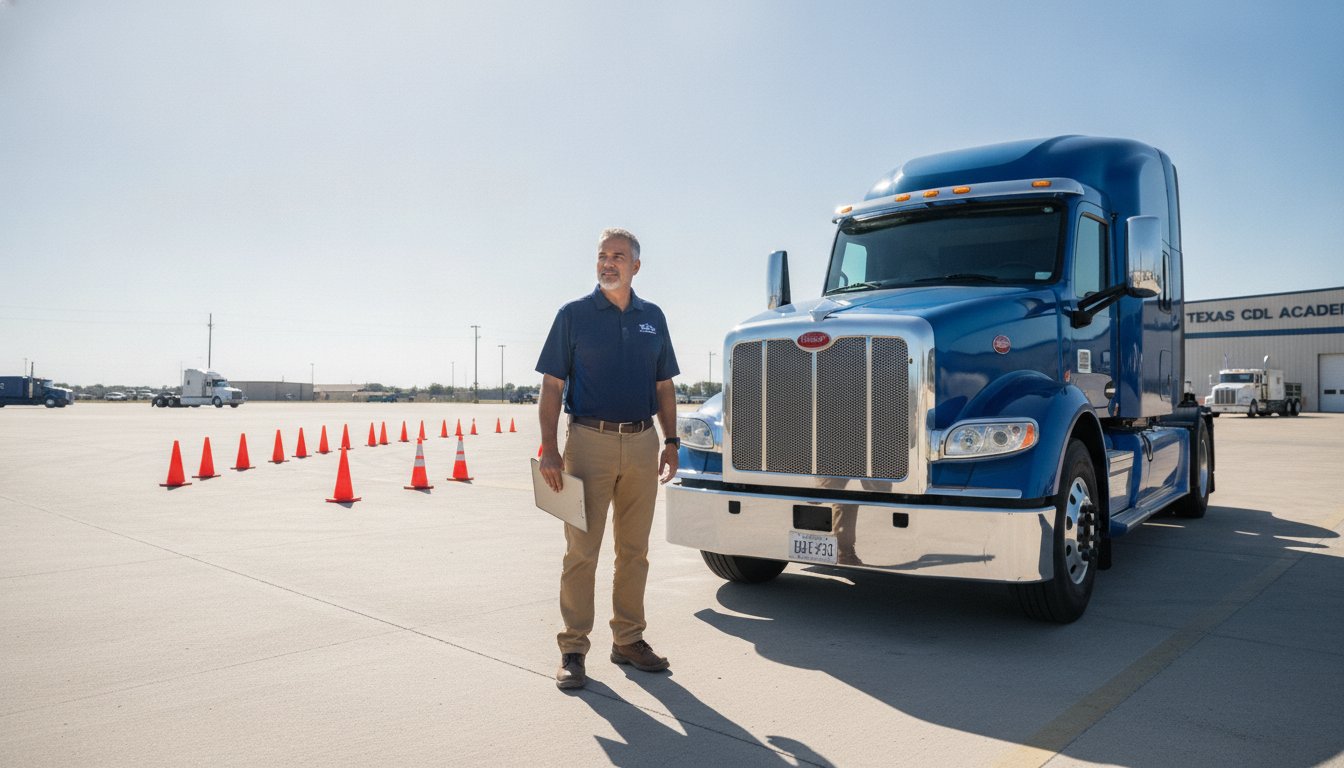
What if the life experience you have built over the last thirty years is exactly what the trucking industry is looking for today? Many people in their fifties find themselves at a crossroads, wondering is 50 too old to become a truck driver, especially when they see younger faces entering the workforce. The reality is that carriers across Texas, particularly in the Dallas-Fort Worth area, are actively seeking the maturity and reliability that often come with age. You aren’t starting late; you are starting with a professional edge that younger drivers haven’t developed yet.
We understand the hesitation you might feel about learning manual shifting or passing a modern DOT physical after years away from a classroom environment. It is completely normal to feel a bit of anxiety about a career change of this magnitude. This guide will show you why starting a trucking career at 50 is not only possible but highly advantageous in the current Texas job market. We will walk you through the roadmap for training at Lone Star Truck Driving Academy, from mastering ELDT theory to passing your on-site testing, so you can move forward with confidence toward a stable and rewarding new chapter.
Key Takeaways
- Understand why the answer to is 50 too old to become a truck driver is a resounding no, as the industry increasingly values the maturity and safety focus of older professionals.
- Discover the specific advantages mature rookies bring to the table, including higher reliability for carriers and lower risk profiles for fleet insurance.
- Learn how modern truck technology and “no-touch freight” options have reduced the physical strain of the job, making it a viable long-term career for adults.
- Get a clear, five-step roadmap for your career change, starting with the DOT medical certification and moving through ELDT permit preparation.
- See how Lone Star Truck Driving Academy supports career changers in the DFW area with flexible training schedules and authorized on-site testing.
Is 50 Too Old to Become a Truck Driver in 2026?
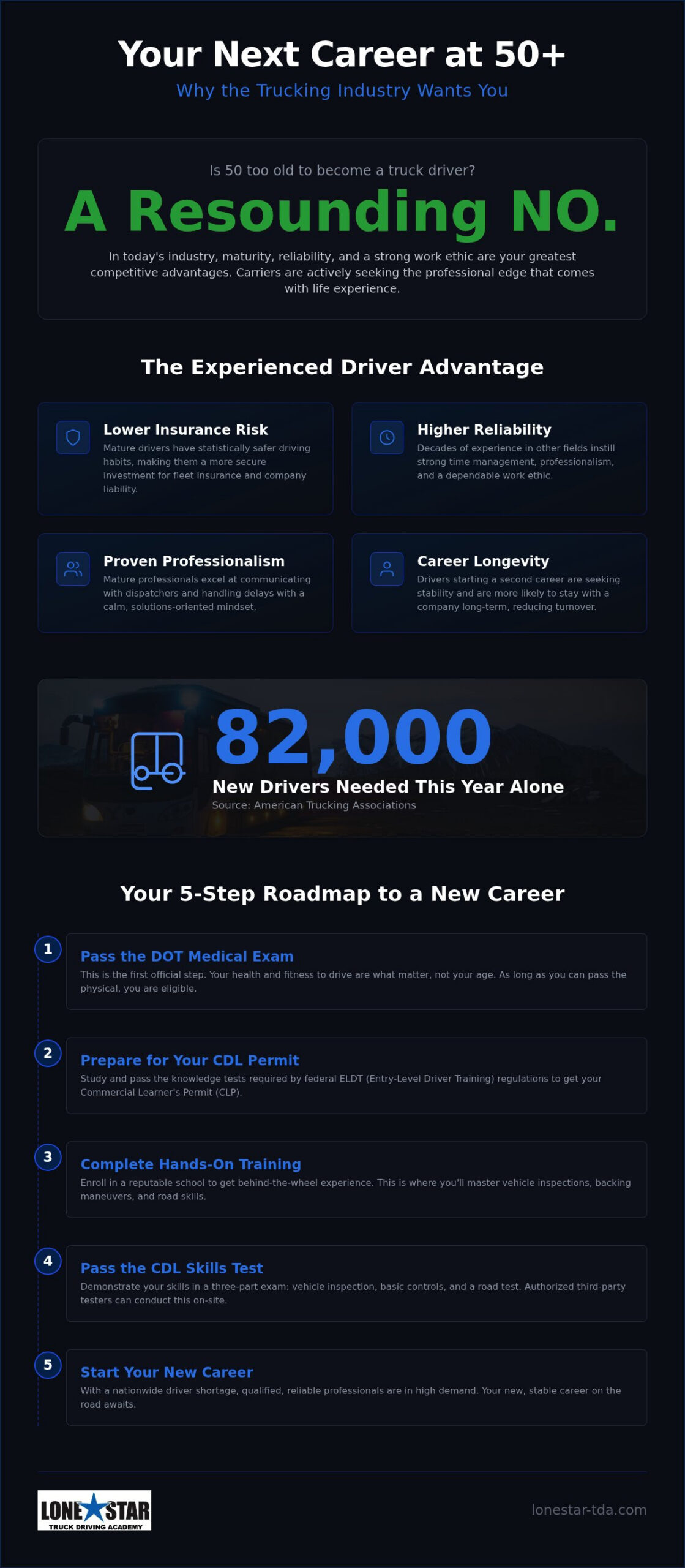
The short answer is a definitive no. If you are asking yourself is 50 too old to become a truck driver, you should know that 50 is actually an excellent age to enter the industry. In 2026, the trucking landscape has shifted significantly. While youth was once prioritized, the industry now values safety, reliability, and maturity above almost everything else. Carriers across Texas are currently facing a massive driver shortage, with the American Trucking Associations estimating a need for 82,000 new drivers this year alone. This high demand means that companies are looking for professionals who can bring a steady hand and a strong work ethic to their fleets.
Trucking has become a premier “second career” choice for many adults in the Dallas-Fort Worth area. Whether you are transitioning from a physically demanding trade or a stagnant office job, the road offers a level of independence and stability that is hard to find elsewhere. In 2026, the trend of starting a trucking career later in life is more than just a necessity; it’s a strategic move for those who want to secure their financial future without the stress of traditional corporate ladders.
The Reality of Age in the Trucking Industry
The FMCSA does not care about the year on your birth certificate. Their regulations focus entirely on your health and your ability to safely operate a commercial vehicle. As long as you can pass the mandatory DOT physical, you are eligible to become a truck driver. We frequently work with students at Lone Star Truck Driving Academy who are looking for a fresh start now that their children have graduated or moved out. These individuals find that the “prime age” for trucking is actually the intersection of good health and life-earned maturity. If you are ready to put in the work, our Class A CDL training is designed to help adults of all ages master the skills needed for the road.
Why 50 is Actually an Advantage
You might feel like a rookie, but your life experience gives you a massive head start. Recruiters in the DFW area, from Mansfield to Fort Worth, often prefer hiring older drivers because they represent a lower insurance risk. Statistical data shows that mature drivers are less likely to take unnecessary chances or engage in aggressive driving behaviors. Your decades of experience in other industries have likely taught you how to manage time, communicate professionally, and handle stressful situations with a level head. These are the exact qualities that make a driver successful. Reliability is the most valuable currency in trucking, and at 50, you’ve already proven you have it. When you consider the question, is 50 too old to become a truck driver, remember that your maturity is your greatest competitive advantage.
The Experienced Driver Advantage: Why Carriers Hire 50+ Rookies
Many people starting a new career path worry about age discrimination. However, when you ask is 50 too old to become a truck driver, you’ll find that the industry actually views your age as a badge of reliability. Trucking companies across North Texas are increasingly looking for “mature rookies” because they bring a level of stability that younger applicants often lack. For a fleet manager, a driver in their fifties represents a lower insurance risk. Statistical trends suggest that older drivers are more likely to follow safety protocols and maintain their equipment, which directly impacts a carrier’s bottom line.
Another significant factor is career longevity. Drivers who enter the industry as a second or third career tend to stay with their initial company much longer than younger drivers. They aren’t just looking for a temporary paycheck; they are looking for a stable professional home. This commitment makes you a high-value asset for carriers in Dallas, Mansfield, and Fort Worth who are tired of the high turnover rates common among younger employees.
Professionalism and Soft Skills
Your decades of previous work experience have already equipped you with “soft skills” that are vital in trucking. Communicating effectively with a dispatcher or handling a delay at a shipping dock requires patience and professionalism. While a younger driver might get frustrated by a three-hour wait, a seasoned professional understands that these delays are part of the logistics cycle. Texas carriers specifically seek out mature drivers for regional routes because they can trust them to represent the company well when interacting with high-value clients. This level of professional maturity is something you cannot teach in a classroom; you have to live it.
Empty Nesters and the Travel Lifestyle
For many adults in their fifties, the “empty nest” phase of life provides a unique opportunity for travel. Many individuals are now pursuing second acts as truck drivers as a way to see the country while getting paid. Unlike younger drivers who may need to be home every night for small children, mature drivers often have the flexibility to take longer routes or enjoy the scenery of the open road. This lifestyle flexibility is a major advantage during the hiring process.
If you are currently employed but looking to make this transition, our weekend CDL classes allow you to train without quitting your current job. We focus on helping you leverage your existing strengths while mastering the technical aspects of the rig. If you have questions about how your specific background fits into the industry, feel free to contact our team for a straightforward conversation about your future.
Overcoming Common Concerns: Health, Physicality, and Tech
Even when you recognize the professional advantages of your age, it’s natural to have practical concerns about the transition. Many students ask is 50 too old to become a truck driver because they worry about the physical demands or the learning curve of modern technology. The reality of the industry in 2026 is far more accommodating than most people realize. Trucking has evolved into a tech-assisted profession that prioritizes driver comfort and safety, making it accessible for anyone willing to learn the systems.
Passing the DOT Physical at 50
The Department of Transportation (DOT) physical is often the biggest source of anxiety for older students. This exam focuses on your ability to drive safely, checking your blood pressure, vision, and hearing. If you manage pre-existing conditions like diabetes or high blood pressure with medication, you can still pass. Having a disability or a chronic condition doesn’t necessarily disqualify you from driving as long as it is controlled and monitored by a medical professional.
As of 2026, the medical certification process has been modernized for better efficiency. Medical examiners now submit your results directly to the FMCSA via the National Registry II system. While paper certificates are still used during the current transition period through October 2026, the electronic system ensures your records stay updated. At Lone Star Truck Driving Academy, we help our students understand these requirements early so there are no surprises when it’s time to get behind the wheel.
Is Trucking Still Physically Demanding?
The image of a driver struggling with heavy chains or wrestling a manual gear stick is largely a thing of the past. Modern fleets in the DFW area utilize trucks equipped with power steering, air-ride ergonomic seating, and automated transmissions. Many carriers now offer “no-touch freight” opportunities, meaning you are responsible for the driving while others handle the loading and unloading. This shift significantly reduces the physical strain on your back and joints.
The debate between manual and automatic transmissions is also simpler than it used to be. While we believe in the value of comprehensive training, many new drivers prefer the ease of automatic trucks. If you initially trained on an automatic and want to expand your career options later, we offer an automatic restriction removal service. This allows you to prove your proficiency on a manual transmission and opens doors to a wider variety of specialized roles. Technology like GPS and Electronic Logging Devices (ELDs) are also designed to be user-friendly, acting as digital assistants that help you manage your route and hours without the paperwork headaches of the past.
5 Steps to Becoming a Truck Driver After 50
Transitioning into a new industry requires a clear, manageable plan. If you are still wondering is 50 too old to become a truck driver, having a structured roadmap can help replace uncertainty with action. The process is straightforward, but it requires following specific federal and state regulations. In 2026, the path to your CDL involves five primary milestones:
- Step 1: Obtain your DOT Medical Examiner’s Certificate. This is your first priority. You must visit a certified examiner to ensure you meet the physical requirements for commercial driving.
- Step 2: Pass the CDL Permit tests (CLP). You will need to study the Texas Commercial Motor Vehicle Drivers Handbook and pass written exams at the DPS.
- Step 3: Complete ELDT training. Federal law requires you to finish Entry-Level Driver Training from a provider on the FMCSA registry.
- Step 4: Pass the Skills and Road Test. You will demonstrate your ability to inspect the vehicle, perform backing maneuvers, and drive safely in traffic.
- Step 5: Choose a carrier. Decide if you prefer over-the-road (OTR) routes that take you across the country or local DFW routes that keep you closer to home in Mansfield or Fort Worth.
Permit Preparation and ELDT
For many adult learners, the thought of taking a written test after years away from school is intimidating. This is why CDL permit prep is such a vital first step. We focus on breaking down complex regulations into clear, understandable concepts. Since the ELDT mandate took full effect, you must complete a specific curriculum before you can even schedule a road test. At Lone Star Truck Driving Academy, we’ve integrated the ELDT Theory process into our training to ensure you are fully compliant with 2026 standards. We handle the paperwork and reporting to the federal registry so you can focus on learning the material.
Mastering the Skills Test
The practical portion of the exam is where your maturity really shines. While younger students might rush, older drivers tend to be more methodical during the pre-trip inspection and backing maneuvers. Practicing on the same equipment you will use for your exam is a major advantage. To help reduce testing anxiety, we offer authorized third-party testing at our own facilities. This means you can take your final exam in a familiar environment with instructors who have supported you throughout your training. It is a much more relaxed experience than heading to a busy state testing site in Dallas. Remember, is 50 too old to become a truck driver is a question of skill and health, not age. With the right preparation, you can master these maneuvers just as well as anyone else on the road.
Speak with an advisor about starting your training today
Why Lone Star Truck Driving Academy is the Right Choice for Your Career Change
Choosing the right training partner is just as important as the decision to change careers. If you’ve spent weeks wondering is 50 too old to become a truck driver, you don’t need a school that treats you like a teenager. You need an environment that respects your background. At Lone Star Truck Driving Academy, we view our students as professionals in transition. We don’t just teach you to pass a test; we prepare you for the realities of the Texas shipping industry through hands-on experience and real-world guidance.
Our roots are deep in the Dallas-Fort Worth area. We maintain strong connections with carriers in Dallas, Mansfield, and Fort Worth, which gives our students a localized perspective on regional logistics. Unlike large, national carrier schools that often lock you into restrictive employment contracts, we are an independent academy. This means you maintain your freedom to choose the carrier that best fits your lifestyle after you earn your CDL. We provide the tools for mastery, but you keep the keys to your own future.
Tailored Instruction for Adult Learners
We understand that adult learners have different needs than younger students. Our instructors are patient and focus on practical application rather than just reading from a manual. We keep our class sizes small to ensure you get the behind-the-wheel time you need to feel confident. Whether you’re training at our locations in Dallas/Fort Worth or Greensboro, you’ll find a supportive community of instructors who have helped many individuals through similar life transitions.
Specialized Training Options
Every student has a different goal for their second act. Some want the stability of a Class A regional route, while others are interested in hot shot driver training to start their own small business. If you previously held a CDL and let it lapse, our refresher courses are designed to get you back up to speed quickly. We offer flexible weekday and weekend options so you can manage your training alongside your current life commitments. Transitioning at 50 is about working smarter, not harder. When you look back and realize the answer to is 50 too old to become a truck driver was always a clear “no,” you’ll be glad you started with a team that understood your value from day one.
Contact Lone Star Truck Driving Academy to discuss your new career today.
Take the Wheel of Your New Professional Journey
Starting a new career path in your fifties is a strategic move that leverages your maturity and life experience. The trucking industry doesn’t just accept older drivers; it actively seeks them out for their reliability and professional work ethic. We have seen throughout this guide that the answer to is 50 too old to become a truck driver is a resounding no. Modern equipment and no-touch freight options have removed the old physical barriers, making this a sustainable and profitable path for years to come.
Lone Star Truck Driving Academy is here to act as your mentor through every step of this transition. We provide expert ELDT and permit preparation to get you started, along with flexible weekend classes that respect your current schedule. Our authorized on-site third-party testing ensures you can complete your journey in a familiar, supportive environment without the stress of state-run facilities in the DFW area. You’ve already built a lifetime of skills; now it’s time to put them to work in a career that offers the stability and independence you deserve.
Start Your New Career with Lone Star Truck Driving Academy
Your experience is your greatest asset on the road. We look forward to helping you turn that maturity into a successful second act and a secure future.
Frequently Asked Questions
Will I be able to find a job as a 50-year-old rookie driver?
Yes, you can absolutely find work, and many recruiters actually prefer mature drivers. When people ask is 50 too old to become a truck driver, they often don’t realize that carriers value the stability and work ethic that older professionals bring. Your maturity makes you a lower insurance risk, which is a major selling point for companies across the DFW area looking for reliable fleet members.
How long does CDL training take for someone starting at 50?
Most students complete their training in three to six weeks. The duration depends on whether you choose a full-time weekday schedule or our flexible weekend classes. We prioritize hands-on mastery over speed, ensuring you feel confident behind the wheel before you head to your skills test. This methodical approach is especially helpful for those transitioning into the industry after decades in another field.
What are the health requirements for a CDL over age 50?
The health requirements are the same for all drivers and involve passing a DOT physical. This exam checks that your blood pressure, vision, and hearing meet federal safety standards. Even if you have managed health conditions like diabetes, you can still qualify for your medical certificate. The primary goal is to ensure you can safely operate a commercial vehicle without medical interference.
Is manual shifting hard to learn at an older age?
Manual shifting is a technical skill that requires practice, but it is not inherently harder to learn at 50. Our patient instructors break down the process of double-clutching into manageable steps. If you find that manual shifting isn’t for you, many modern fleets use automatics. We can help you train on an automatic and provide restriction removal services if you decide to switch later.
Can I take CDL classes while still working my current job?
You can definitely train while keeping your current job by enrolling in our weekend programs. We understand that many people asking is 50 too old to become a truck driver are established professionals who need to maintain their current income. Our flexible schedules in Mansfield and Fort Worth allow you to complete your training without the financial stress of being unemployed during school.
Are there local driving jobs in Texas that don’t require weeks away from home?
Yes, the Dallas-Fort Worth area is a massive hub for local and regional driving jobs. Many carriers offer “home daily” or “home weekly” routes that don’t involve long-haul travel across the country. These roles are perfect for drivers who want the stability of a trucking income while staying close to their families and communities in North Texas.
What is the ELDT requirement and how does it affect me?
The ELDT requirement is a federal mandate that requires all new drivers to complete a specific training curriculum before testing. This ensures that every driver on the road has received standardized theory and behind-the-wheel instruction. We are a registered provider on the FMCSA Training Provider Registry, so we handle all the necessary certification and reporting to the government on your behalf.
Article by
Lone Star Truck Driving Academy Training Team
Lone Star Truck Driving Academy provides CDL training for students throughout Texas and North Carolina. Our training team specializes in Class A CDL training, Class B CDL training, CDL refresher programs, automatic restriction removal, third-party testing support, and workforce development partnerships designed to help students build successful careers in the transportation industry.
Training Information Notice
The information provided in this article is for general educational purposes only. Program availability, tuition, licensing requirements, testing procedures, endorsement requirements, and regulatory standards may change over time. Prospective students should contact Lone Star Truck Driving Academy directly to verify current program details, admissions requirements, and state-specific CDL regulations.