What if your first day behind the wheel wasn’t just a job, but the first step on a ladder that leads to high-paying specialized roles? Many new drivers in the Dallas-Fort Worth area worry that trucking is a repetitive cycle of highway miles with no room for growth. It’s common to feel overwhelmed by the federal ELDT regulations or confused about how a learner’s permit actually turns into a long-term profession. You want a career that offers stability and a clear way to increase your earnings as you gain experience.
This article outlines a clear commercial driving career path to help you move from entry-level driving to elite specialist roles. You’ll discover how to navigate the tiered progression of the industry, from mastering a manual transmission to entering the lucrative Hot Shot market. Whether you’re starting in Mansfield, Fort Worth, or Greensboro, we’ll show you how to build a roadmap from your first day of school to a successful retirement. We will also explore how a local partner like Lone Star Truck Driving Academy provides the hands-on training and third-party testing you need to advance through every stage of your journey with confidence.
Key Takeaways
- Understand how federal ELDT standards and your choice of training school set the foundation for your marketability as a new driver.
- Learn the practical differences between local, regional, and over-the-road routes to find the best fit for your lifestyle during your first year.
- Discover how removing an automatic restriction or entering the Hot Shot niche can significantly accelerate your commercial driving career path.
- Identify long-term opportunities for career advancement, including transitioning into safety management, instruction, or owner-operator roles.
- Explore how on-site third-party testing in the DFW area and Greensboro streamlines your transition from the classroom to the road.
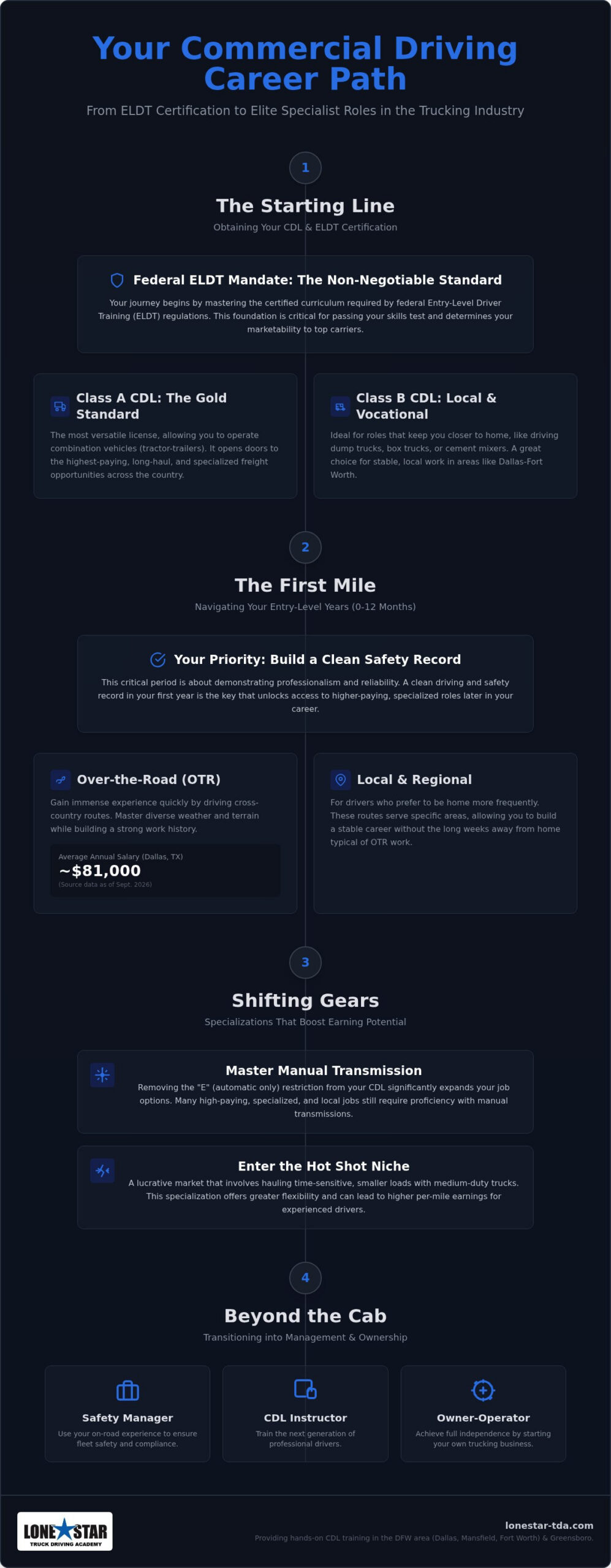
The Starting Line: Obtaining Your CDL and ELDT Certification
Your journey as a professional driver doesn’t begin on the highway; it starts in the classroom and on the training range. In 2026, the federal Entry-Level Driver Training (ELDT) mandate remains the non-negotiable standard for anyone entering the industry. This regulation ensures that every student achieves proficiency in a certified curriculum before they can even attempt a skills test. Choosing the right school in the Dallas-Fort Worth area or Greensboro is about more than just proximity. It’s about your future marketability. Carriers look for graduates from academies that prioritize safety and thorough preparation, as this reduces their insurance risks and long-term training costs.
Obtaining a Commercial Driver’s License (CDL) requires a methodical approach. You aren’t just learning to drive a large vehicle; you’re mastering a professional craft. The transition from theory to hands-on skills is where many students find their footing. This initial phase sets the tone for your entire commercial driving career path, providing the technical foundation you’ll rely on for decades to come.
Navigating ELDT Theory and Permit Prep
Theory is the blueprint for your success. The ELDT theory certification process covers everything from basic operation to advanced maneuvers and emergency protocols. To pass your CDL permit test on the first attempt, you need a structured study plan that cuts through the dense language of the manual. Remember that in Texas, as of June 2026, all knowledge exams at the DPS are administered in English only. Using a program that offers comprehensive ELDT theory certification and permit prep helps you clear this hurdle with less stress. Once you have your Commercial Learner’s Permit (CLP) in hand, you must hold it for at least 14 days before taking your skills test, making this early preparation vital for staying on schedule.
Choosing Between Class A and Class B Paths
Deciding which license class to pursue is a critical decision in your commercial driving career path. A Class A CDL is the “gold standard” for those who want maximum flexibility. It allows you to pull heavy trailers and tackle long-haul routes, which often lead to the highest earning tiers in the industry. If you’re looking for diverse opportunities, Class A CDL training is the most versatile route to take.
Class B licenses are better suited for local vocational work in places like Mansfield or Fort Worth. These roles typically involve driving dump trucks, delivery vehicles, or cement mixers. While Class B roles often keep you closer to home, Class A offers the ability to scale your career into specialized freight. At Lone Star Truck Driving Academy, we help you weigh these options based on your personal goals and the specific needs of the Texas and North Carolina job markets.
The First Mile: Navigating Your Entry-Level Driving Years
Once you’ve cleared the initial hurdles of training and testing, your first 12 months on the job serve as a critical foundation. This period is less about the miles you cover and more about the reputation you build. Carriers prioritize drivers who maintain a clean safety record and demonstrate mastery over their electronic logging devices (ELDs). These early years are the most influential part of your commercial driving career path, as they determine which specialized, high-paying roles you can access later. Beyond just handling a rig, you’ll need to develop professional soft skills. This includes effective communication with dispatchers and providing reliable customer service at delivery points across the DFW metroplex or the Triad region.
The Over-the-Road (OTR) Experience
Many new drivers choose Over-the-Road (OTR) positions to gain massive amounts of experience in a short timeframe. OTR driving involves traveling across the country, often spending weeks away from home. In the Dallas area, for instance, OTR drivers earn an average annual salary of approximately $80,973 as of September 2026. This lifestyle offers a unique sense of independence and the chance to see the United States while getting paid. It’s an excellent way to learn how to handle various weather conditions and challenging terrain, which is essential for meeting federal CDL standards over the long term. While the time away from home can be demanding, the experience gained is often what unlocks future opportunities in specialized hauling.
Local and Regional Alternatives
If staying closer to home is your priority, local or regional routes offer a different pace. Local Class B roles, such as driving a dump truck in Mansfield or Fort Worth, typically allow you to be home every night. While the average entry-level pay for these roles in Dallas is approximately $46,941, the trade-off is a consistent schedule and local familiarity. Regional driving serves as a middle ground. These routes often keep you within a specific area, like the Texas Triangle or the Piedmont Triad near Greensboro. This allows for a better balance between earning potential and home time. If you have questions about which route fits your current lifestyle, feel free to reach out to our team for personalized guidance on your next steps.
Shifting Gears: Specializations That Boost Earning Potential
Getting your license is the first step, but the career outlook for truck drivers shows that the most significant growth happens when you specialize. Many drivers find themselves plateauing because they lack specific technical certifications. To move into the highest tiers of the industry, you must actively seek out endorsements and skills that set you apart from the general pool of applicants. This proactive approach is what transforms a standard driving job into a lucrative, long-term commercial driving career path.
Removing the Automatic Transmission Restriction
A common hurdle for new drivers is the “automatic restriction” on their license. If you took your skills test in a truck with an automatic transmission, you are legally restricted from operating a manual. This limits your options significantly. Roughly 40% of specialized fleets, particularly those in heavy haul, construction, and oil field services throughout Texas, still rely on manual gearboxes. Mastering a 10-speed or 13-speed transmission opens doors to these niche roles. Our automatic restriction removal service focuses on the shifting techniques and clutch control required to clear this restriction from your license, giving you access to a much wider range of equipment.
Entering the Hot Shot Trucking Niche
Hot Shot trucking has become a high-demand niche for drivers who value agility and specialized freight. This type of hauling typically involves time-sensitive loads delivered using medium-duty trucks and flatbed trailers. It requires a high level of precision in load securement and navigation, especially when delivering to tight job sites in Dallas or Mansfield. Because these loads are often “power only” or emergency shipments, the work is fast-paced and requires excellent time management. Enrolling in Hot Shot driver training ensures you understand the specific equipment and regulatory requirements for this sector, allowing you to diversify your commercial driving career path.
Beyond equipment mastery, consider endorsements like Hazmat or Tanker. These certifications require additional knowledge tests but make you an essential asset for carriers moving high-value or hazardous materials. If you have been out of the cab for an extended period, a refresher course is a smart way to stay sharp and maintain your professional standards. Whether you are in Fort Worth or Greensboro, staying current with these specializations is the key to maintaining your momentum in the industry.
Beyond the Cab: Transitioning into Management or Business Ownership
A successful commercial driving career path often evolves as your personal and professional goals change. While many drivers enjoy the independence of the road for decades, others eventually look for ways to leverage their experience in leadership or business ownership. The trucking industry is massive, and your time behind the wheel provides the exact technical knowledge needed to manage fleets, oversee safety programs, or run your own company. Planning for this transition early allows you to build the professional network and financial stability required for your next move beyond the driver’s seat.
The Owner-Operator Route
Becoming an owner-operator is a significant step toward professional independence. This path involves moving from a company driver role to owning or leasing your own equipment. It’s a transition from being an employee to becoming a small business owner. You’ll need to master the business side of trucking, including fuel surcharges, maintenance reserves, and insurance requirements. Many drivers in the Fort Worth and Dallas areas start by hauling specialized freight as independent contractors before expanding into their own small fleets. This route offers the potential for more control over your schedule, though it comes with the responsibility of managing all operational costs and regulatory compliance.
Training the Next Generation
For many veteran drivers, the most rewarding phase of their commercial driving career path involves moving into instruction or safety management. Experienced professionals are in high demand to serve as CDL instructors. This role offers excellent home time and the stability of a local job in Mansfield or Greensboro. It allows you to share your real-world industry knowledge with students, ensuring they prioritize safety and professionalism from day one. Sharing your expertise helps improve road safety for everyone and ensures the next generation of drivers is prepared for the challenges of the modern highway.
Beyond the classroom, fleet supervision and corporate training roles provide a path into the management side of transportation. Large carriers need safety managers who truly understand the daily challenges drivers face. Your experience with federal standards and specialized equipment makes you an ideal candidate for these positions. With a median age of 57 for heavy truck drivers, the industry needs a new generation of leaders to step into these management and supervisory roles as the current workforce nears retirement.
Contact our team to discuss your long-term career goals
Launching Your Career with Lone Star Truck Driving Academy
Starting your commercial driving career path requires more than just a permit and a few hours of practice. It demands a training partner that understands the local landscape and the regulatory hurdles you’ll face. Lone Star Truck Driving Academy provides that foundation through a student-centric approach that prioritizes your success from the very first day. Whether you’re in the heart of Dallas or the Piedmont Triad, we’ve designed our programs to fit the realities of a working adult’s life. We don’t just teach you how to pass a test; we prepare you for the professional standards carriers expect.
Local Training in Texas and North Carolina
Proximity matters when you’re balancing training with existing responsibilities. We serve the entire DFW metroplex with specialized CDL training in Mansfield, Dallas, and Fort Worth. Our presence extends to North Carolina as well, where we support students in Greensboro, Winston-Salem, and High Point. By training in the same regions where you’ll likely start your first local or regional routes, you gain a practical understanding of the traffic patterns and industry hubs specific to your area. This local relevance makes the transition from student to professional much smoother.
Streamlined Testing and Certification
One of the biggest friction points in obtaining a license is the wait for state-administered skills tests. We address this by offering authorized on-site third-party testing. This allows you to test on the same equipment and in the same environment where you practiced, which significantly reduces student anxiety. Instead of waiting weeks for a DPS appointment, you can move through the certification process efficiently and get on the road sooner. Our instructors provide hands-on guidance throughout this process, ensuring you meet all federal standards while feeling confident in your abilities.
Flexibility is another core part of our mission. We understand that many of our students are currently working other jobs while trying to improve their circumstances. That’s why we offer weekend CDL classes to accommodate your schedule. You don’t have to choose between a paycheck and your future. From your initial inquiry to your final skills test, we act as your career partner, helping you navigate ELDT theory, permit prep, and specialized certifications like manual transmission training. Taking the first step is simple. Reach out to our team to discuss your goals, and we’ll help you map out a commercial driving career path that leads to the stability and professional growth you’ve been looking for.
Take Control of Your Professional Future
A successful commercial driving career path is built on a foundation of technical mastery and strategic planning. You’ve seen how moving from entry-level OTR or local routes into specialized niches like Hot Shot trucking can unlock new levels of professional freedom. By proactively removing automatic restrictions and obtaining essential endorsements, you position yourself as a high-value asset to carriers across the DFW metroplex and the Triad.
Lone Star Truck Driving Academy is here to act as your steady partner through every transition. We ensure your journey starts right with ELDT theory certification included in our programs. As a manual transmission restriction removal specialist with authorized on-site third-party testing, we’ve designed our services to keep your momentum high and your wait times low. Whether you’re training in Mansfield, Fort Worth, or Greensboro, the right preparation makes all the difference.
The road ahead is full of opportunity for those who are prepared to lead. We look forward to helping you build a legacy in the trucking industry.
Frequently Asked Questions
How long does it take to start a commercial driving career?
It typically takes four to six weeks to complete a comprehensive training program and obtain your license. Your commercial driving career path begins with ELDT theory certification and permit preparation, followed by behind-the-wheel skills training. Once you hold your Commercial Learner’s Permit for at least 14 days, you can take your skills test. Authorized on-site testing can further speed up the process by avoiding long wait times at state facilities.
Is a Class A or Class B CDL better for long-term career growth?
A Class A CDL generally offers more versatility for long-term growth because it allows you to operate heavier vehicles and pull trailers. While a Class B license is excellent for local delivery or construction roles in Mansfield and Fort Worth, a Class A opens doors to over-the-road, regional, and specialized flatbed work. Most drivers find that having a Class A provides more options to pivot their career as the market shifts.
What is the most profitable specialization in truck driving?
Specializations that require additional endorsements or technical skills, such as Hazmat, Tanker, or Hot Shot driving, often command higher rates. These roles involve more responsibility and specialized equipment handling. While OTR driving is a common starting point, moving into niche sectors like heavy haul or becoming an owner-operator allows you to maximize your professional value without relying solely on high mileage for your income.
Can I remove an automatic restriction from my CDL later?
Yes, you can remove an automatic transmission restriction by passing a supplemental skills test in a manual vehicle. Many drivers find this necessary because a significant portion of specialized fleets still utilize manual transmissions. Lone Star Truck Driving Academy offers a specific restriction removal service to help you master shifting and clutch control, ensuring you aren’t locked out of high-paying jobs that require manual mastery.
Do I need to go OTR for my first year of driving?
No, you aren’t required to drive over-the-road during your first year, although it is a popular way to gain experience quickly. Many local companies in the DFW area and Greensboro hire entry-level drivers for local delivery, beverage distribution, or construction hauling. These roles allow you to stay close to home while building the clean safety record necessary to advance your commercial driving career path into more specialized sectors.
What are the physical requirements for a CDL career path?
All commercial drivers must pass a Department of Transportation (DOT) physical exam to ensure they can safely operate a large vehicle. This exam checks your vision, hearing, blood pressure, and overall physical health. Maintaining your medical certificate is a legal requirement for keeping your CDL active. It’s a standard part of the preparation process that ensures you’re ready for the physical demands of professional driving.
How much does CDL training cost in Texas or North Carolina?
Costs for CDL training vary based on the type of license you’re pursuing and the level of instruction required. While we don’t quote specific tuition rates here, keep in mind that Texas state fees include a $25 permit fee and a $97 issuance fee for most drivers. It’s important to choose a school that includes ELDT theory and permit prep to avoid hidden costs and ensure you’re fully prepared for the testing phase.
Can I get my CDL training while working a full-time job?
Yes, it’s entirely possible to complete your training while maintaining a full-time job. We understand that many students in Fort Worth and Greensboro are balancing current financial needs with their future goals. Lone Star Truck Driving Academy offers flexible weekend classes specifically for working adults. This allows you to progress through your theory and hands-on training at a pace that doesn’t disrupt your current income.
Article by
Lone Star Truck Driving Academy Training Team
Lone Star Truck Driving Academy provides CDL training for students throughout Texas and North Carolina. Our training team specializes in Class A CDL training, Class B CDL training, CDL refresher programs, automatic restriction removal, third-party testing support, and workforce development partnerships designed to help students build successful careers in the transportation industry.
Training Information Notice
The information provided in this article is for general educational purposes only. Program availability, tuition, licensing requirements, testing procedures, endorsement requirements, and regulatory standards may change over time. Prospective students should contact Lone Star Truck Driving Academy directly to verify current program details, admissions requirements, and state-specific CDL regulations.