You don’t need to spend four years in a classroom to secure a stable, professional future in the Dallas-Fort Worth area. Many people feel stuck in low-paying jobs because they assume retraining requires a massive time commitment or complex academic hurdles. It’s frustrating to watch the DFW economy boom while you’re still trying to figure out the right path forward. We understand that confusion, especially when you’re looking at the best career training programs in Texas and trying to make sense of state licensing requirements.
This article will show you how specialized truck driving programs can fast-track your transition into a high-demand career in weeks, not years. At Lone Star Truck Driving Academy, we’ve helped countless students in Dallas, Fort Worth, and Mansfield navigate the shift from feeling stuck to feeling empowered behind the wheel. We’ll walk you through the specifics of ELDT theory, the differences between Class A and Class B training, and how to handle manual transmission requirements. You’ll gain a clear roadmap for finding a reputable school near home and understanding every step needed to earn your CDL and start your new professional journey with confidence.
Key Takeaways
- Vocational training in the DFW Metroplex provides a faster, more direct path to a stable career compared to traditional four-year academic routes.
- Specialized CDL courses stand out among career training programs Texas offers, allowing you to enter the workforce in a high-demand field within just a few weeks.
- Understanding the 2026 ELDT requirements and permit preparation steps is essential for navigating the modern commercial licensing process without unnecessary delays.
- Niche opportunities like hot shot trucking and professional RV driver training offer unique career paths for those who prefer specialized vehicle operations.
- Choosing a mentor-led academy with flexible weekend options and on-site testing can significantly reduce the stress of retraining while you continue to work.
The Landscape of Career Training Programs in Texas
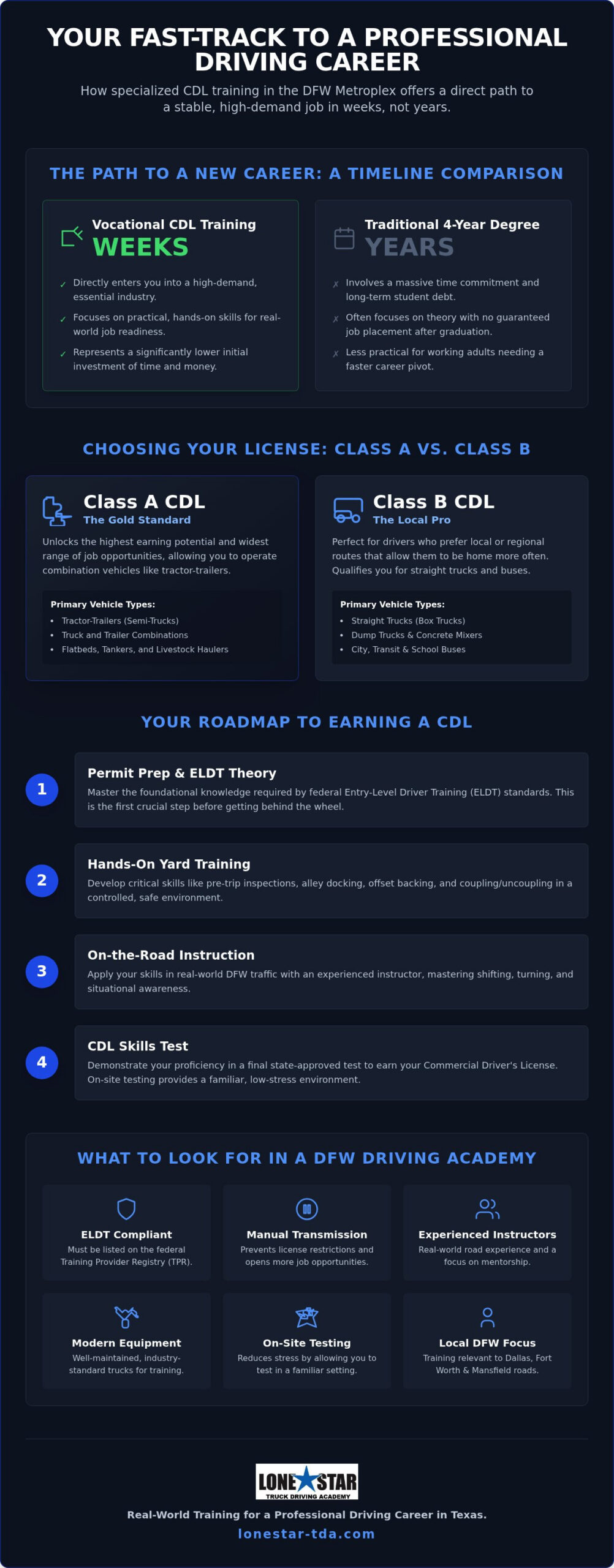
Texas is currently the powerhouse of the American economy. Much of this growth is fueled by the logistics and transport sector, which serves as the backbone for every industry from construction to retail. When you look at career training programs Texas offers, you’ll see a clear divide between traditional four-year degrees and vocational training. While a university degree requires a massive investment of time and money, vocational paths in the DFW Metroplex focus on getting you into the workforce quickly. For working adults in 2026, these short-term, high-impact programs are the most practical way to pivot into a stable role without the burden of long-term student debt.
Professional driver education isn’t just about learning to steer a big rig; it’s a highly regulated field overseen by the FMCSA and state agencies. To legally operate, you must obtain a Commercial Driver’s License (CDL), which involves meeting strict federal standards. This ensures that every driver on the road has the mastery needed to handle heavy equipment safely and professionally. By focusing on these regulated skills, career training programs Texas residents choose provide a direct route to industries that aren’t just growing, they’re essential.
Why Professional Driving is a Top Tier Career Path
The supply chain in Texas remains incredibly resilient. As the state’s freight market continues to expand, the demand for skilled drivers grows with it. We’re seeing a significant shift toward specialized transport, including regional freight and hot shot delivery, which allows for more variety in the type of work you do. Professional driving gives you the autonomy to manage your own workspace on the open road rather than being tethered to a desk. It’s a career built on reliability and mastery rather than corporate politics.
Identifying High-Quality Training Near Dallas and Fort Worth
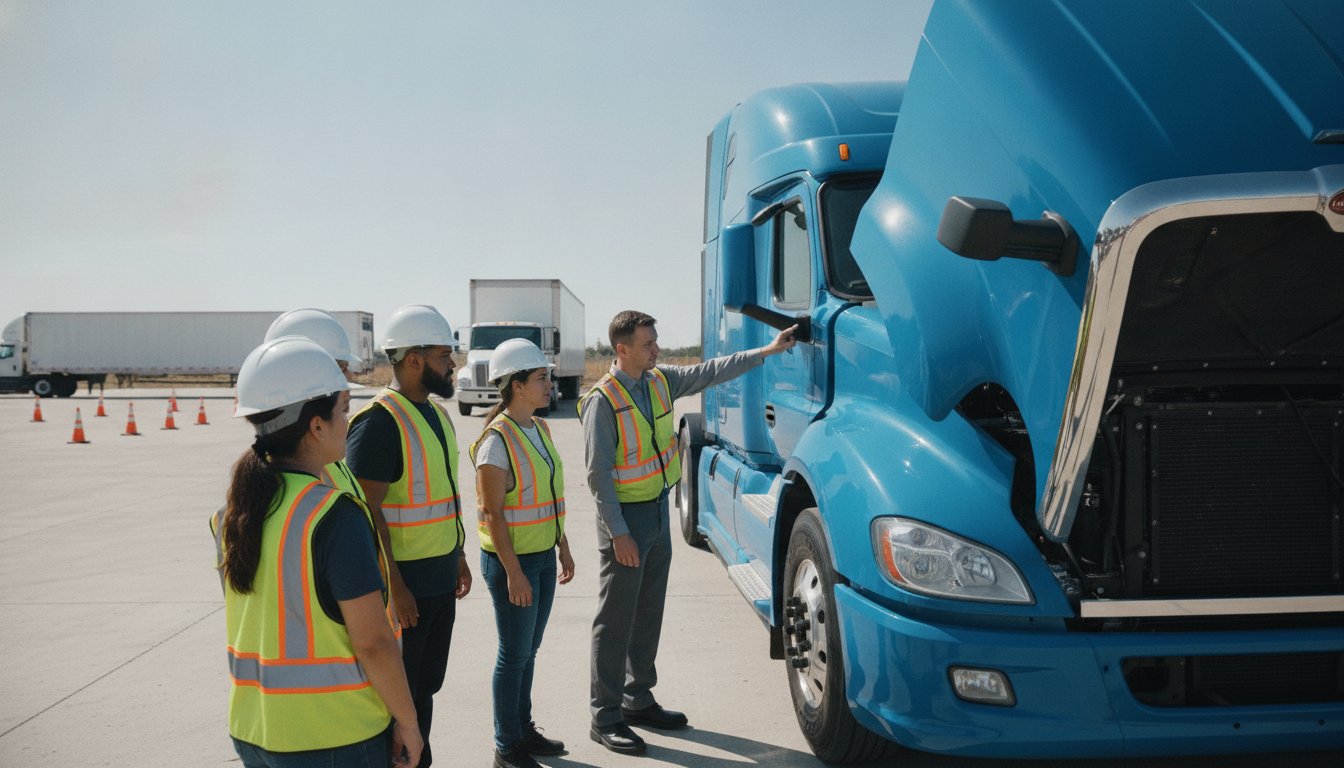
Finding the right school is the first step toward your new identity. If you’re in Mansfield, Arlington, or Dallas, you should prioritize academies that offer modern equipment and instructors who have actual road experience. It is vital to choose a school listed on the federal Training Provider Registry (TPR) to ensure your training meets the 2026 ELDT standards. At Lone Star Truck Driving Academy, we focus on hands-on preparation that goes beyond just passing a test. We want you to feel ready for the real-world challenges of the industry from day one.
Understanding CDL Training: The Fastest Path to a New Career
When you evaluate the various career training programs Texas offers, few can match the speed and direct ROI of professional driver education. You aren’t spending months in a lecture hall. Instead, you are quickly immersed in the practical skills required to master commercial motor vehicles (CMVs). This process demands both physical coordination for maneuvers like backing and coupling, and the mental stamina to navigate complex safety regulations and DFW traffic patterns. While technology has introduced simulators into the classroom, we believe nothing replaces real-world yard time where you can feel the weight of the trailer and the responsiveness of the air brakes.
A professional Class A CDL training program is designed to take a beginner and turn them into a proficient operator. You’ll start with the fundamentals of pre-trip inspections, which is arguably the most critical part of a driver’s daily routine. From there, you move to the yard to practice alley docking and offset backing. It’s a methodical journey from theory to mastery. If you are ready to see how these skills translate into a new lifestyle, you can contact us to discuss which training schedule fits your current commitments.
Class A vs. Class B: Choosing Your Direction
Choosing between a Class A and Class B license depends entirely on your long-term goals. Class A is often considered the gold standard because it allows you to operate tractor-trailers and heavy freight combinations, providing the most flexibility for over-the-road or regional work. On the other hand, a Class B license is perfect for those who prefer staying local. It qualifies you for roles driving delivery trucks, concrete mixers, or transit buses. Before you start, it’s helpful to review the official Texas CDL Requirements to ensure you meet the residency and medical standards for your chosen path.
The Importance of Manual Transmission Training
We always encourage students to learn on a manual transmission. If you take your road test in an automatic, the state places an “E” restriction on your license, which legally prevents you from driving a stick-shift truck. Mastering the art of double-clutching and proper gear selection makes you a more versatile professional and opens up a wider range of job opportunities. If you already have a license but are limited by an automatic restriction, our automatic restriction removal service can help you upgrade your credentials. This small investment in skill mastery significantly increases your value in the Texas logistics market.
Specialized Training for Hot Shot and RV Drivers
Not every road to professional success requires a semi-truck. In the DFW Metroplex, we see a significant surge in demand for specialized vehicle operations that fall outside the typical long-haul narrative. These niches are often overlooked in general discussions about Career Training Programs in Texas, yet they offer some of the most flexible and entrepreneurial paths available today. Whether you’re looking to start a business as an owner-operator or just want to ensure your family is safe during a cross-country trip, specialized training provides the mastery that a standard driver’s license simply doesn’t cover. We focus on the practical skills that allow you to handle these unique rigs with the same professionalism as a veteran trucker.
Mastering Hot Shot Driver Training
Hot shot trucking involves hauling high-priority, time-sensitive loads using heavy-duty pickup trucks and specialized trailers. It’s an agile environment where you’re often the go-to solution for construction sites in Mansfield or oil fields needing parts immediately. Success in this field requires more than just owning a dually. You need to master load securement using chains and straps, understand ELD logbook management, and be able to maneuver a gooseneck trailer into tight loading zones. Our Hot shot driver training focuses on these specific technical skills. It’s also important to remember that in Texas, a CDL is required for hot shot operations if the combined Gross Vehicle Weight Rating (GVWR) of your truck and trailer exceeds 26,000 lbs. Many independent operators find this to be the perfect entry point into the Texas freight market because of the lower overhead costs compared to a full Class A setup.
Safety for Large Rigs: RV Driver Education
We also see a growing number of new RV owners who realize that driving a 40-foot motorhome is a completely different beast than driving a sedan. A standard license might be legal for most consumer rigs, but it doesn’t prepare you for the actual physics of a large vehicle. Key maneuvers like backing into a narrow campsite or managing a tall rig in highway crosswinds can be nerve-wracking without proper instruction. We help retirees and families build the confidence they need to enjoy the RV lifestyle safely. We focus on pivot points, wide turns, and air brake systems to ensure you’re prepared for any situation on the road. Building this foundation of safety prevents accidents and ensures that your investment in the RV lifestyle remains a source of joy rather than stress.
Navigating Texas CDL Requirements: From ELDT to the Road Test
Starting a professional driving career in 2026 requires following a specific federal and state roadmap. You can’t simply walk into a DPS office and take a test anymore. You need a structured approach that complies with the Entry-Level Driver Training (ELDT) mandate. Among the various career training programs Texas provides, the most effective ones are those that guide you through every administrative and practical hurdle. This process ensures that when you finally hit the roads in Dallas or Fort Worth, you’ve met the high standards required for modern commercial operations.
The 2026 landscape for licensing includes specific costs and residency rules you should know upfront. To apply for a Texas CDL, you must be a resident and hold a valid Class C license. The Commercial Learner’s Permit (CLP) fee is currently $25, while the Class A or B CDL itself costs $97 and remains valid for eight years. Staying informed about these logistics helps you manage your transition without any financial surprises.
Step 1: ELDT Theory and Permit Preparation
Your journey begins with mastering the written exams for your permit. This includes general knowledge, air brakes, and combination vehicles. Our ELDT theory certification and permit prep streamlines this by providing a digital curriculum that you can complete efficiently. The ELDT mandate’s primary goal is to enhance road safety by requiring standardized training from providers listed on the federal Training Provider Registry. By finishing the theory portion early, you spend less time in a classroom and more time in the yard getting hands-on experience.
Step 2: The Benefits of Third-Party and On-Site Testing
One of the biggest frustrations for students in the DFW Metroplex is the long wait time at the DPS for a road test. It’s common to see backlogs that stretch for weeks. We solve this by offering Third-party testing services directly at our facility in Mansfield. Testing on-site means you don’t have to deal with the stress of an unfamiliar testing location or a long administrative wait. There’s also a significant psychological advantage to testing on the same equipment you used during your training. You already know the pivot points of the trailer and the feel of the gearbox, which allows you to perform with much higher confidence.
Schedule your orientation and start your training today
Starting Your Journey at Lone Star Truck Driving Academy
Your future doesn’t have to wait for a four year degree or a massive life upheaval. We’ve built our academy to serve as a bridge between your current job and a new, stable career in the trucking industry. Choosing from the various career training programs Texas offers can feel overwhelming, but we simplify the process by focusing on what actually matters: hands-on mastery and safety. We don’t operate like a corporate factory. Instead, we function as a mentor-led academy where instructors take the time to ensure you feel confident behind the wheel before you ever head to a testing site.
We understand that most of our students are working adults with existing responsibilities. That’s why we offer flexible scheduling options, including weekend CDL classes, alongside our full-time programs. Whether you are coming from Mansfield, Dallas, or Fort Worth, our location is designed to be accessible for the local community. We encourage you to schedule a tour of our facility so you can see our equipment, meet our instructors, and evaluate how our training style aligns with your specific career goals.
Why DFW Students Choose Lone Star TDA
Students choose us because we prioritize the human element of training. We’ve created a supportive environment where mastery is the standard, not just a suggestion. While we never provide job guarantees, we do offer our students access to a broad network of local industry connections and carriers who recognize the quality of our graduates. For those who already have experience but have been off the road for a while, we also provide a CDL refresher course to help you update your skills and regain your professional edge in the current market.
Your Path to Professional Advancement Starts Here
Advancing your career requires a shift in mindset. Professional driver education is rigorous and demands focus, but the rewards of stability and autonomy are well worth the effort. Our admissions team is ready to help you create a personalized training plan that accounts for your current skill level and your long-term objectives. We’ll help you understand the paperwork, the permit process, and the training timeline so there are no surprises along the way. Your journey toward a new professional identity starts with a single conversation about your future.
Contact Lone Star Truck Driving Academy today
Take Control of Your Professional Future
The path to a more stable and rewarding career is closer than you think. By choosing specialized vocational training over traditional academic routes, you can move from a low-paying job to a professional driving role in just a few weeks. We’ve explored how the landscape of career training programs Texas offers has shifted, making it easier for residents in Mansfield, Dallas, and Fort Worth to access high-quality instruction.
As an FMCSA Registered Training Provider, Lone Star Truck Driving Academy is dedicated to your mastery of the road. We reduce the stress of the licensing process by offering authorized on-site third-party testing, ensuring you can complete your journey on familiar ground. Whether you’re interested in Class A, Class B, or specialized hot shot training, the right preparation makes all the difference in your long-term success.
It’s time to build a foundation for professional growth that you can rely on for years to come. We’re ready to help you take that first step toward a new identity on the open road.
Frequently Asked Questions
What are the basic requirements for career training programs in Texas for CDL?
To begin training, you must hold a valid Texas Class C driver’s license and prove your residency in the state. You need to be at least 18 years old for intrastate driving or 21 for interstate commerce and hazardous materials. Additionally, obtaining a DOT medical card is a mandatory step. These are the foundational standards for career training programs Texas students must meet before starting their ELDT theory or behind-the-wheel instruction.
How long does it take to complete a Class A CDL training program?
Most students can complete their professional training in a few weeks, though the exact timeline depends on your chosen schedule and individual pace. We prioritize mastery of skills over a simple hour count, ensuring you are proficient in both backing maneuvers and road safety. Whether you are training in Dallas or Mansfield, our goal is to prepare you thoroughly for the workforce without unnecessary delays, focusing on real-world readiness and confidence.
Can I take CDL classes on the weekends if I am currently working?
Yes, we offer flexible weekend CDL classes specifically for working adults in the DFW Metroplex. This allows you to keep your current job while you retrain for a more stable career path. Our weekend curriculum is just as rigorous as our weekday programs, covering everything from permit preparation to hands-on yard time. It is an ideal way for residents in Fort Worth or Arlington to transition into trucking without a gap in income.
What is ELDT theory certification, and is it required in Texas?
Entry-Level Driver Training (ELDT) theory certification is a federal mandate required for all new Class A or B applicants since 2022. You must complete this training through an FMCSA-registered provider before you can take your final road test. Our academy includes this certification as part of our comprehensive career training programs Texas curriculum. It covers essential safety regulations and vehicle systems, ensuring you meet all federal standards while training in the DFW area.
How do I remove an automatic transmission restriction from my CDL?
To remove the “E” restriction from your license, you must successfully pass a road test in a commercial vehicle equipped with a manual transmission. We provide an automatic restriction removal service that focuses on the mechanics of double-clutching and proper gear selection. Mastering these manual skills makes you a more versatile driver and opens up a wider range of employment opportunities across the Texas freight and logistics market.
What is the difference between Class A and Class B commercial licenses?
A Class A license is the standard for tractor-trailers, allowing you to operate combination vehicles with a GVWR over 26,001 pounds. A Class B license is designed for single vehicles over that weight, such as delivery trucks, buses, or concrete mixers. Your choice depends on your lifestyle goals, whether you want the flexibility of long-haul freight or the consistency of a local route in cities like Fort Worth or Denton.
Does Lone Star Truck Driving Academy provide the truck for the road test?
Yes, we provide the commercial vehicles for your road test, and they are the same trucks you use during your training. This is a significant benefit of our authorized on-site third-party testing in Mansfield. Testing in a familiar vehicle helps reduce anxiety and allows you to focus on demonstrating your mastery of the skills you’ve learned. You won’t have to deal with the logistics of finding a truck for your exam.
Are there specialized programs for hot shot trucking in the DFW area?
We offer specialized hot shot driver training for those who want to operate heavy-duty pickups with trailers for high-priority loads. This program is perfect for independent owner-operators in Dallas and Fort Worth who want to enter the industry with lower overhead costs. We focus on critical technical skills like load securement with chains and straps, logbook management, and precision trailer maneuvering to ensure you can handle these unique rigs professionally.
Article by
Lone Star Truck Driving Academy Training Team
Lone Star Truck Driving Academy provides CDL training for students throughout Texas and North Carolina. Our training team specializes in Class A CDL training, Class B CDL training, CDL refresher programs, automatic restriction removal, third-party testing support, and workforce development partnerships designed to help students build successful careers in the transportation industry.
Training Information Notice
The information provided in this article is for general educational purposes only. Program availability, tuition, licensing requirements, testing procedures, endorsement requirements, and regulatory standards may change over time. Prospective students should contact Lone Star Truck Driving Academy directly to verify current program details, admissions requirements, and state-specific CDL regulations.