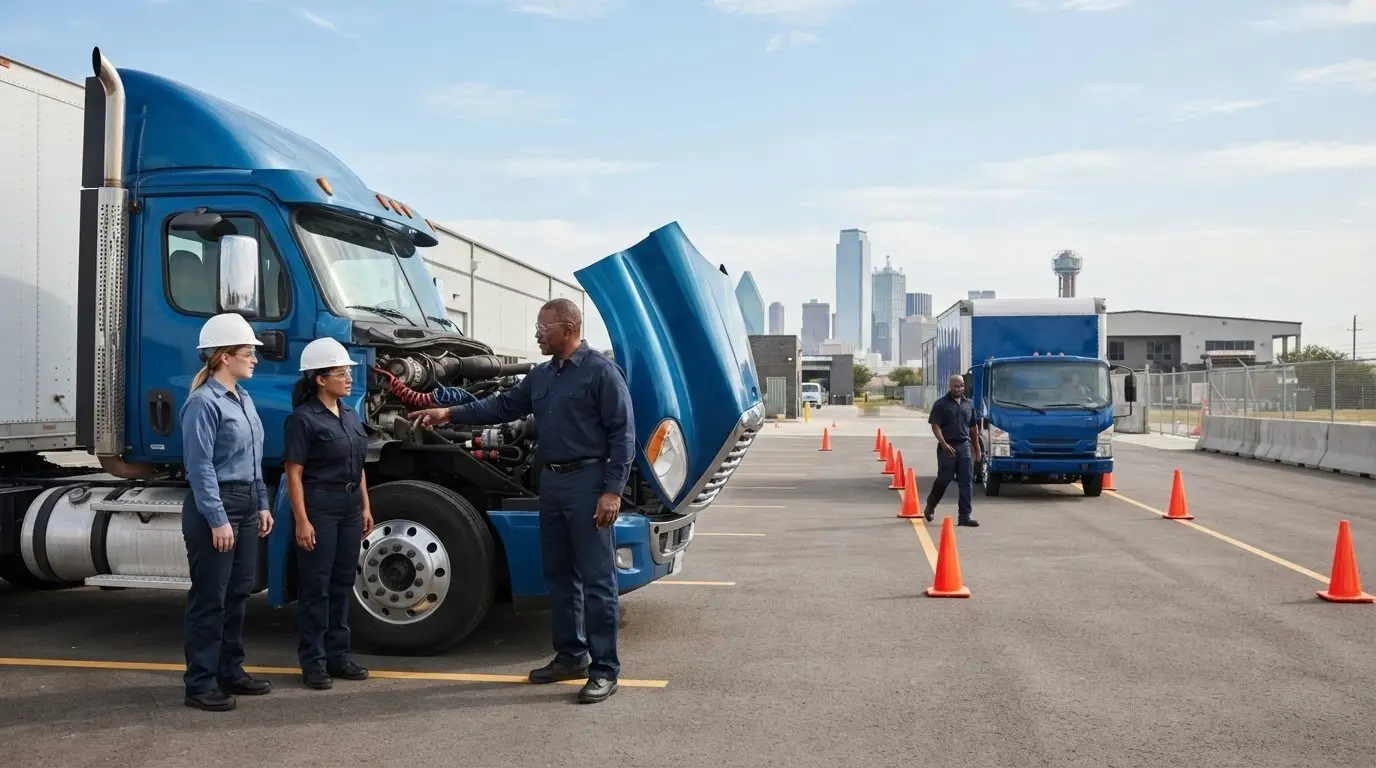
For Dallas-area residents, workforce development Dallas can connect career goals with practical instruction, including training for commercial driving. If you are considering a CDL, start by identifying the type of driving work you want to pursue. That goal will help you compare Class A and Class B training, plan permit preparation, and understand what hands-on instruction and testing involve.
CDL preparation combines knowledge with practical skills. ELDT theory and permit preparation help build a foundation, while behind-the-wheel instruction gives you a chance to apply what you have learned. Planning these stages around work and other responsibilities can make the process easier to manage.
This guide explains how CDL training can fit into a workforce development pathway in Dallas-Fort Worth. You will learn how Class A and Class B training differ, what to consider when comparing training options, and how to map out the steps toward testing. It also covers the questions to ask yourself before choosing a commercial driving path.
Whether you are in Dallas, Mansfield, Fort Worth, Arlington, or Denton, a useful first step is matching your goal with the right preparation. A clear view of the process can help you decide whether commercial driving is a fit and what to do next.
Key Takeaways
- Connect your career goal with practical skills and training that relate to the work you want to pursue.
- Compare academic study, employer-led learning, and vocational training by their focus and fit for your goal.
- Understand how CDL theory preparation and hands-on instruction contribute to commercial driving readiness.
- Plan permit preparation, training, practice, and testing, and use current Texas guidance for licensing requirements.
- Explore Lone Star Truck Driving Academy’s Class A and Class B training, ELDT and permit preparation, refresher instruction, and on-site testing.
What Workforce Development in Dallas Means for Local Career Seekers
For an individual, workforce development Dallas is more than a regional plan or a list of openings. It means building skills and preparing for work that matches your goals. The broad idea of workforce development includes education, training, and career pathways. To make it practical, ask yourself: What kind of work am I aiming for, and what skills or credentials could help me prepare?
Workforce development builds job-related skills and career readiness; job placement is a separate outcome, not a guaranteed part of training. Regional economic development focuses on conditions that support business growth. Your own decision is more immediate: choose a career direction, identify the preparation it calls for, and work toward the skills needed to do the job.
A training choice is more useful when it connects learning to real tasks. That can mean practicing relevant skills, developing safety habits, and preparing for a credential associated with an occupation. Credentials can document preparation, but they do not promise a job or determine whether a specific employer will hire you. The right pathway depends on your goals, experience, and the work you want to pursue.
How Dallas-area workforce development supports individuals and employers
Training gives learners a structured way to develop skills for a defined type of work. Employers may benefit when applicants bring preparation related to the tasks they need done. These aims complement each other, but completing a course does not guarantee a particular position.
If you live in Dallas, Mansfield, or Fort Worth, begin by naming the occupation you are considering. Then look at the practical abilities and credentials connected to that path. This keeps your decision grounded in the work you want to do instead of assuming that regional business growth will create the right opportunity for every individual.
Where commercial driver training fits
Commercial driver education is one vocational option. It may fit someone interested in transportation or fleet-related work who is ready to develop the knowledge and vehicle-handling skills involved in professional driving. The CDL class you pursue should align with the type of commercial vehicle and work you have in mind.
In the Dallas-Fort Worth area, CDL training in Dallas can be one step toward that goal. At Lone Star Truck Driving Academy, preparation includes theory study, practical driver education, and testing options. Before committing, consider your career interests, current responsibilities, and the time you can set aside for training. The aim is informed preparation, not a promise of employment.
How CDL Training Builds Practical Workforce Skills in Dallas-Fort Worth
CDL training breaks a career goal into skills to learn and demonstrate. Theory preparation introduces the knowledge behind commercial driving, while practical instruction lets students apply it with a vehicle. Both matter: knowing a safe procedure is different from performing it consistently, and practice is more meaningful when you understand what you are doing and why.
Theory builds understanding; hands-on practice helps turn that understanding into more confident vehicle operation. Together, they prepare learners for the responsibilities involved in commercial driving. Training also gives students a setting to develop professional habits, including attention to safety, steady vehicle control, and the ability to take instruction and apply feedback.
Connect training components to workplace readiness
ELDT theory certification and permit preparation help establish a foundation before behind-the-wheel learning. Students study commercial-driving knowledge, then practical instruction gives them a chance to apply it. Put simply, classroom learning explains the task; coached driving practice helps make it familiar.
Hands-on instruction can involve learning vehicle control, working through maneuvers, and paying attention to surroundings. The goal is not just to move a truck. It is to develop careful, repeatable habits and understand how driving decisions affect safety. Endorsements are separate credentials for specific driving qualifications. Requirements vary, so check current guidance from the Texas Department of Public Safety and relevant federal sources before planning for one.
Choose a training path that fits your goal
Class A and Class B are distinct CDL pathways. Start with the type of commercial driving you want to pursue, then choose training that aligns with it. If you are considering a Class A path, explore Class A CDL training. Class B instruction offers a separate path for learners whose goals call for that license class.
Location and schedule matter, too. If you commute from Dallas, Mansfield, or Fort Worth, account for travel time as well as your work and family responsibilities. Before training begins, map out when you can study theory and set aside time for practical instruction. A realistic plan can help you stay engaged through each stage.
Workforce development Dallas includes many paths, and CDL education is one focused way to build occupation-specific skills. Residents can also explore career resources through Workforce Solutions Greater Dallas. CDL preparation supports readiness for the licensing process, not a guaranteed job or outcome. If you are weighing driver training, focus on the CDL class, skills, and preparation that match your goals.
Compare Workforce Development Pathways Before Choosing Training
Start with the work you want to prepare for. Some routes build broad academic knowledge; others focus on skills used in a particular occupation. Neither is automatically the best choice. When comparing workforce development Dallas options, consider the learning format, time commitment, entry requirements, and how directly the instruction connects to your target role.
| Pathway | Intended learner | Typical focus | Practical outcome |
|---|---|---|---|
| Academic study | Someone seeking broad or advanced learning | Subject knowledge, analysis, and transferable skills | A wider foundation that may support different career directions |
| Employer-led learning | A worker developing skills within a workplace | Procedures, tools, and expectations tied to a role or organization | Greater familiarity with work tasks in that setting |
| Vocational training | A learner preparing for a defined occupation | Occupation-specific knowledge and practical skills | Preparation for a particular type of work or credential pathway |
Match the pathway to the career goal
An academic credential can provide a broad base of knowledge, while vocational instruction concentrates on applying skills to a specific kind of work. Employer-led learning is shaped by a workplace’s tasks and practices. Commercial driving is an example of vocational training: learners prepare for a defined CDL pathway through relevant theory and practical instruction.
Before enrolling, write down the occupation you are aiming for and the skills it calls for. Then decide whether you need broad study, workplace-specific learning, or focused occupational preparation. The Texas Workforce Commission provides information about Texas workforce programs that can help you understand available resources and eligibility considerations.
Account for schedule, preparation, and next steps
Your preferred option also needs to fit your life. Consider time for study, travel, family duties, and current work responsibilities. For CDL training, include both permit and theory preparation and practical instruction in your plan. Training details and licensing requirements can vary, so use current official Texas sources for licensing guidance.
For a commercial driving goal in the area, Dallas CDL training is one vocational route to consider. Compare whether the format and instruction match your learning needs and intended occupation, not just how long a pathway takes. Ask yourself: What skill will I gain? How will I apply it? What step follows the training? The answers can help you choose with purpose without treating any credential as a promise of employment.
Plan a Dallas CDL Training Pathway Step by Step
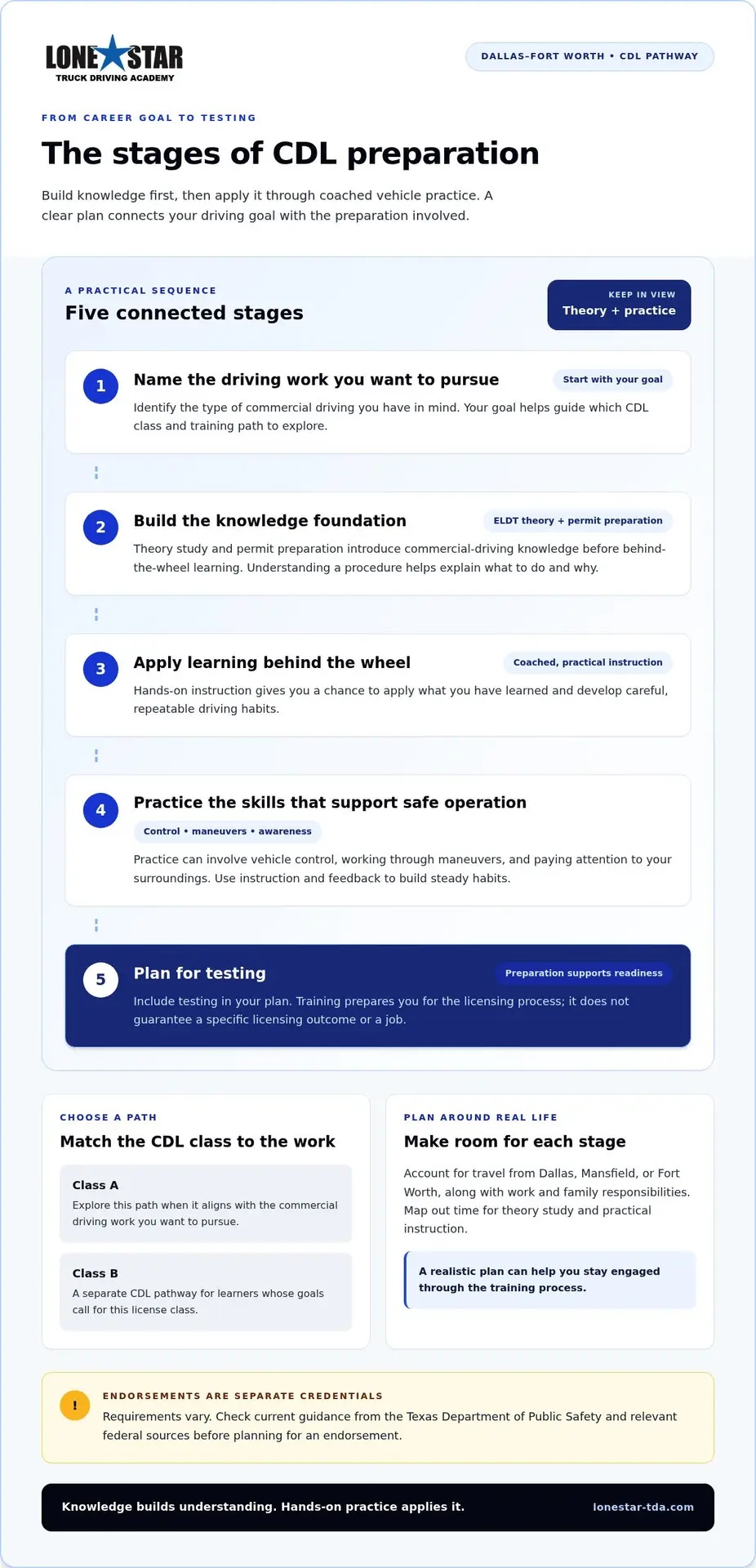
A clear sequence can make CDL preparation easier to manage, especially when you are balancing training with work or family responsibilities. Treat each stage as part of a plan, not a promise of a particular license or job. For workforce development Dallas learners, begin by matching the CDL class to your goal, then learn what preparation and testing involve.
- Clarify your goal. Decide what kind of commercial driving you want to pursue and whether a Class A or Class B path better fits that aim. Your target will help you focus your training questions.
- Review current requirements. Texas CDL rules and procedures can change. Use official Texas Department of Public Safety sources to understand current eligibility, permit, and testing requirements before planning your timeline.
- Prepare for the permit and required learning. Set aside time to study the knowledge material and complete applicable training before moving into practical instruction.
- Train and practice. Build knowledge and behind-the-wheel skills through instruction, then work on applying them consistently and safely.
- Complete testing. Follow the current state process and treat testing as an assessment of preparation, not a guaranteed result.
Prepare for the permit and required learning
Permit preparation helps you study the knowledge needed for the next stage of CDL training. ELDT theory is a distinct learning component for certain CDL applicants, focused on commercial-driving topics before practical skills work. Lone Star Truck Driving Academy provides ELDT theory and permit preparation to help students organize these early steps. Use CDL permit preparation to build a study plan and strengthen your foundation before moving on.
Before starting, make a simple schedule for study and instruction. If you work, identify the times you can realistically protect for learning. Planning those hours in advance is more useful than assuming you will find time later.
Build practical skills and prepare for testing
Hands-on instruction gives you time to develop vehicle control and practice safe, professional operation with guidance. Use that time deliberately: listen closely, ask questions when a maneuver is unclear, and apply feedback. Practice supports readiness, but training and testing do not guarantee a specific licensing outcome.
Third-party testing is an assessment step in the licensing process. Lone Star Truck Driving Academy offers authorized on-site third-party testing, giving students a testing option connected to CDL preparation. Before testing, review current state instructions so you understand the process and can arrive prepared.
Choose a Dallas-Area Training Partner for Your Next Step
Once you have identified commercial driving as a possible career direction, choose training that lines up with your goal. Lone Star Truck Driving Academy provides Class A and Class B CDL training, ELDT theory certification and permit preparation, refresher instruction, and authorized on-site third-party testing. These offerings support different stages of preparation, from building foundational knowledge to practicing driving skills and completing a testing step.
The academy serves learners in Dallas, Mansfield, Fort Worth, Arlington, Denton, Greensboro, High Point, Winston-Salem, and Burlington. As you compare your next steps, consider what you want to learn, which CDL pathway fits your intended work, and how training will fit your responsibilities. That is a grounded way to approach workforce development Dallas: choose preparation that connects to your own career goal.
Find training that fits your commercial driving goal
If your goal calls for a Class A pathway, explore the Class A CDL training program. If you are considering a Class B route, review Class B training. The right starting point depends on the license class relevant to the driving work you are pursuing, so clarify that goal before choosing a program.
Returning drivers may benefit from refresher instruction to rebuild or update practical skills. ELDT theory certification and permit preparation can support learners at an earlier stage, while third-party testing is relevant to those preparing to complete the testing process. These are distinct parts of a training path, not interchangeable services. Drivers with an automatic restriction can also explore the academy’s automatic restriction removal service.
Take the next step with a clear plan
Before you begin, write down your questions. You may want to discuss which CDL class aligns with your goal, what permit preparation involves, how hands-on instruction fits into the process, or whether refresher training suits your experience. If you are balancing a job or family commitments, include your schedule in your planning so you can make a realistic decision.
You do not need to answer every career question at once. Start with the next step that makes sense for you, then build from there. Reviewing your goals and the CDL preparation options can help you understand what the process involves and decide how to proceed.
Take the Next Step With Confidence
A strong career decision begins with a clear picture of the work you want to do. As you consider workforce development Dallas opportunities, think about the kind of professional you want to become and what matters most in your next role. That perspective can help you choose a direction that feels purposeful rather than rushed.
You do not need every answer before taking a first step. Bring your questions, goals, and an honest sense of your current commitments. A focused discussion about CDL training can help you understand the options and decide what makes sense for you.
Start with one informed decision: contact Lone Star Truck Driving Academy to discuss your CDL training goals and the next step that fits your plans.
Frequently Asked Questions
What does workforce development mean in Dallas?
In Dallas, workforce development refers to efforts that connect career preparation with the skills needed across the workforce. For an individual, first distinguish between resources intended to support regional programs and those that support your personal career plan. Dallas County and Tarrant County residents may be served by different local workforce offices, so start with the county where you live when exploring public resources.
How can CDL training support workforce development in Dallas?
CDL training gives career seekers a commercial-driving pathway to consider alongside other options in the Dallas area. To decide whether it fits, look at the types of driving roles that interest you and note the qualifications employers describe. That comparison can help you form specific questions about the CDL path rather than choosing based only on a general interest in transportation or the availability of a course.
Can CDL training help me prepare for a commercial driving career?
Yes. CDL training can be one part of preparing for commercial driving. As you explore the career, read employer descriptions and note the requirements relevant to your preferred work. Keep a list of questions about vehicle types, experience, or credentials associated with those roles. That research can help you decide what to discuss with a training advisor and what career steps may follow training.
What is the difference between ELDT and CDL permit preparation?
They are related but not interchangeable. ELDT is a defined training requirement for certain CDL applicants, while permit preparation focuses on getting ready for the knowledge test connected with a commercial learner’s permit. Identify the license or endorsement you are pursuing, then check current FMCSA and Texas DPS guidance to see which requirements apply to your situation.
How do I choose between Class A and Class B CDL training?
Choose based on the commercial vehicle and type of driving work you intend to pursue. Write down examples of the vehicles or positions you are considering, then compare those details with the official Texas CDL class descriptions. If you are looking at job postings, use their stated license requirements as a research clue, not as a substitute for current state licensing guidance.
Does CDL training guarantee a job after graduation?
No. Completing training does not guarantee a job. To prepare for the employment side, review current postings for roles that interest you and track the qualifications employers request. You can then identify questions about applications, experience, or additional credentials as you plan your next steps. Hiring decisions remain with employers, and opportunities can vary by position.
Can working adults pursue CDL training in the Dallas-Fort Worth area?
Working adults in Dallas, Mansfield, Fort Worth, Arlington, or Denton can explore CDL training while managing other responsibilities. Before committing, compare your regular work calendar with the training commitments and travel involved. Mark predictable conflicts, such as rotating shifts or caregiving duties, and consider how you would handle them. This gives you a realistic basis for deciding when to begin.
Article by
Lone Star Truck Driving Academy Training Team
Lone Star Truck Driving Academy provides CDL training for students throughout Texas and North Carolina. Our training team specializes in Class A CDL training, Class B CDL training, CDL refresher programs, automatic restriction removal, third-party testing support, and workforce development partnerships designed to help students build successful careers in the transportation industry.
Training Information Notice
The information provided in this article is for general educational purposes only. Program availability, tuition, licensing requirements, testing procedures, endorsement requirements, and regulatory standards may change over time. Prospective students should contact Lone Star Truck Driving Academy directly to verify current program details, admissions requirements, and state-specific CDL regulations.