What if the most secure path to a stable, high-paying career in the DFW area didn’t require a four-year degree or a mountain of student debt? You’ve likely noticed that while tech and healthcare get the headlines, the logistics sector is the engine keeping the Lone Star State moving. Many workers feel stuck with stagnant wages or worry that automation might eventually phase out their current roles. It’s frustrating to search for high demand careers in Texas only to find options that require years of expensive schooling or offer very little job security.
At Lone Star Truck Driving Academy, we’ve helped countless individuals trade that uncertainty for a reliable, recession-proof career in just a few weeks. This article will show you how to navigate the fastest-growing industries in Texas and explain why earning your CDL is the most direct route to financial independence. We’ll break down the local DFW job market, clarify which certifications like ELDT and manual transmission training actually matter, and provide a clear roadmap to getting your license without the typical confusion.
Key Takeaways
- Identify why logistics and transportation are currently the leading high demand careers in Texas and how the Texas Triangle drives local job growth.
- Learn how to pivot into a professional driving role in just a few weeks, bypassing the high costs and long timelines of traditional university degrees.
- Understand the importance of Federal ELDT theory certification and how it establishes the professional standards you need to succeed in the industry.
- Discover the value of hands-on training in the DFW area, including specialized skills like automatic restriction removal to expand your career opportunities.
- Find a clear, step-by-step path to evaluating training providers so you can build a stable future in a recession-proof field.
Trends Shaping the Texas Workforce in 2026
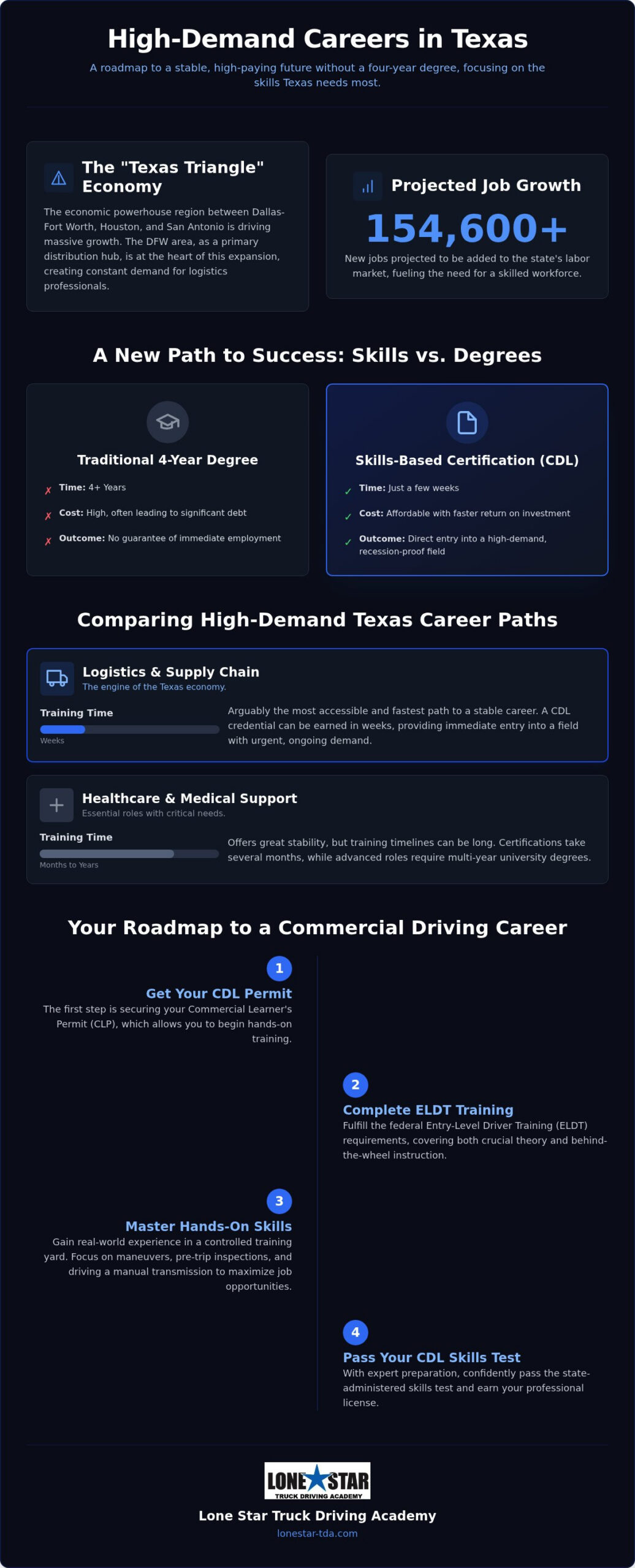
Texas is currently witnessing a massive economic shift. As we move through 2026, the state’s labor market is projected to add approximately 154,600 jobs, representing a 1.1 percent increase in total employment. This growth isn’t just happening in tech hubs; it’s deeply rooted in the physical movement of goods and the expansion of our infrastructure. If you’re looking for high demand careers in Texas, you have to look at how the state is physically growing. Population surges in Dallas and Fort Worth are creating an immediate need for professionals who can support a more complex supply chain.
The Rise of the “Texas Triangle” Economy
The geographic area between Dallas-Fort Worth, Houston, and San Antonio, often called the “Texas Triangle,” has become the heart of the Texas economy. This region attracts major logistics and manufacturing companies because of its central location and robust highway systems. North Texas, specifically the DFW area, serves as a primary distribution hub. This concentration of industry creates a constant need for skilled professionals who can keep supply chains moving. As more businesses reshore their manufacturing to Texas to avoid international shipping delays, the demand for local transport only intensifies.
Skills-Based Hiring vs. Traditional Degrees
A significant trend in 2026 is the move away from four-year degree requirements. Employers across the state now prioritize specific certifications and “future-proof” skills that offer immediate value. When you compare the cost of a university diploma to the speed and affordability of vocational training, the choice becomes clear for many working adults. Many are finding that high demand careers in Texas are more accessible through targeted training programs than traditional academia.
- Certifications provide a faster path to the workforce, often taking weeks instead of years.
- Hands-on skills are harder to automate than administrative or entry-level white-collar tasks.
- Specialized training, such as Class A CDL training, meets a direct, urgent market need that employers are desperate to fill.
In cities like Mansfield and Fort Worth, population growth is driving a surge in infrastructure projects. This means more materials need to be moved, more warehouses need to be stocked, and more professional drivers are required to bridge the gap. Identifying a stable career path means looking for roles that technology can’t easily replace. Professional driving and logistics management remain at the top of that list because they require human judgment, technical mastery, and a commitment to safety that machines haven’t yet mastered.
Top 5 High-Demand Career Paths in the Lone Star State
Identifying the right path requires looking at where the state is investing its resources. While many sectors are growing, five specific industries stand out for their stability and earning potential. These high demand careers in Texas offer a mix of technical mastery and essential services that keep our communities running. According to the Texas Workforce Commission, several of these roles appear on the list of Texas’ top high-growth occupations, highlighting a clear trend toward skilled, credentialed labor.
Healthcare and Medical Support
Texas continues to face a critical need for frontline medical workers, particularly in the rapidly expanding medical districts of Dallas and Fort Worth. Roles like nursing assistants, phlebotomists, and specialized medical technicians are essential as our population ages and grows. While these positions offer great stability, the training timelines can vary significantly. Some entry-level certifications take several months to a year, and advanced nursing roles often require a multi-year commitment to university schooling before you can enter the field.
The Logistics and Supply Chain Sector
For those looking for a faster transition, the logistics sector is arguably the most accessible path. The Dallas-Fort Worth area functions as a massive “Inland Port,” where rail, air, and highway systems converge to move billions of dollars in freight. By 2026, logistics professionals will be vital in supporting the projected 154,600 new jobs added to the state’s economy, as freight volume continues to outpace the national average. Unlike many other high demand careers in Texas, you can enter this field with professional credentials like a Class A or Class B CDL in a matter of weeks rather than years.
Energy, Construction, and Skilled Trades
The state’s landscape is also being reshaped by the building boom and the energy transition. In West Texas, wind and solar technicians are in high demand to maintain the nation’s largest renewable energy grid. Closer to home in DFW, the construction surge requires skilled project managers and tradespeople. Specialized trades like HVAC and electrical systems remain recession-proof because they require hands-on expertise that cannot be outsourced or automated. If you’re ready to see how these trends apply to your own future, you can reach out to our team for a personalized look at your training options.
- Renewable Energy: Wind turbine technicians are among the fastest-growing roles in rural Texas.
- Construction: Infrastructure managers are needed to oversee the expansion of North Texas highways and housing.
- Skilled Trades: Licensed electricians and HVAC technicians are seeing record demand due to new commercial developments.
Why Commercial Driving is a Top-Tier Texas Career
The “Texas Triangle” formed by Dallas-Fort Worth, Houston, and San Antonio is the most active logistics hub in the country. Because so much freight moves through our state, the transportation industry offers a level of stability that few other sectors can match. While some high demand careers in Texas are vulnerable to economic shifts, the need to move food, fuel, and building materials never stops. This constant movement creates a massive demand for professional drivers, particularly in North Texas where DFW serves as a primary gateway for national trade.
Mastering this trade has become more professional and standardized in recent years. Since the federal ELDT mandate took effect in 2022, every new driver must complete a registered training program. This ensures that everyone on the road meets the same high standards for safety and technical knowledge. It has effectively turned truck driving into a respected, credentialed trade. With the national driver shortage estimated at 60,000 for 2026, Texas employers are looking for drivers who demonstrate this level of professional preparation and reliability.
Class A vs. Class B: Choosing Your Path
Deciding which license to pursue depends on your long-term goals and the type of work you enjoy. A Class A license is the gold standard for versatility, allowing you to operate heavy tractor-trailers and combinations. It opens doors to long-haul routes or regional work where you’re moving massive amounts of freight. Most students find that Class A CDL training provides the widest range of employment opportunities across the state.
On the other hand, Class B CDL holders typically focus on local delivery roles. This includes operating straight trucks, dump trucks, or large passenger vehicles. It’s an excellent choice if you prefer staying closer to home in the Mansfield or Fort Worth areas and want a predictable daily schedule. Both paths offer a secure entry into the logistics sector, but Class A provides the maximum flexibility for your future.
Specialized Niche: Hot Shot Trucking
Texas is also home to a thriving hot shot trucking market, which is a specialized niche perfect for independent-minded drivers. Hot shot drivers typically use medium-duty trucks, like a one-ton pickup with a flatbed trailer, to deliver time-sensitive loads to oil fields or construction sites. It’s a fast-paced environment where you’re often the go-to person for urgent equipment needs. If you enjoy the idea of being your own boss or working in a more agile setting, hot shot driver training can help you break into this profitable Texas industry.
How to Transition into a High-Demand Role Without a 4-Year Degree
Transitioning into a new field doesn’t have to take years. While many high demand careers in Texas require specialized knowledge, that knowledge is often best gained through intensive, skills-based programs. Start by researching the specific certifications required for your chosen industry. For example, the Texas DPS now requires all CDL knowledge exams to be conducted in English as of June 1, 2026. Knowing these regulatory details early prevents frustrating delays in your career shift.
Evaluating Vocational Schools in DFW
Choosing the right cdl training school is the most critical step in your journey. You want a provider that prioritizes behind-the-wheel time over classroom lectures. In the DFW area, look for facilities that offer third party CDL testing on-site. This allows you to test in a familiar environment on the same equipment you used for training, which often significantly reduces the wait times found at state-run DPS offices. Be wary of any school making “guaranteed placement” promises; reputable academies focus on mastery and preparation, which are what truly impress employers.
The Importance of ELDT Compliance
Since February 2022, federal law has mandated Entry-Level Driver Training (ELDT) for all new Class A and B applicants. You can’t just study a manual and take the test anymore. Completing ELDT theory certification and permit prep through a registered provider is non-negotiable. Professional preparation is far superior to self-study because it covers over 30 essential theory topics required by the FMCSA. This structured approach ensures you aren’t just passing a test but are actually prepared for the realities of the road.
Once you’ve secured your permit and finished your theory, focus on practical skills. This includes mastering backing maneuvers, pre-trip inspections, and urban road driving. Finally, leverage the reputation of your training academy. Many local companies in Mansfield and Fort Worth look specifically for graduates from schools known for high standards and safety-first mentalities. Your training serves as your first professional network, providing the foundation for a stable future among the many high demand careers in Texas without the burden of university debt.
Speak with a training advisor about your next steps
Launching Your Career with Lone Star Truck Driving Academy
Choosing to enter one of the high demand careers in Texas is a significant life decision. At Lone Star Truck Driving Academy, we don’t just teach you how to pass a test; we prepare you for a lifelong career. Our student-centric approach in both our Mansfield and Dallas facilities is designed to meet the specific needs of working adults. We understand that you might be balancing a current job while trying to improve your circumstances. That’s why we offer weekend CDL classes to ensure your training fits your existing schedule.
Our instructors aren’t just teachers; they’re seasoned professionals who have spent years on the road. They act as mentors, sharing real-world guidance that you won’t find in a textbook. Whether you’re pursuing a Class A license or looking into our automatic restriction removal service, you’ll receive the individual support necessary to master your equipment. Removing an automatic restriction is a smart way to expand your career growth, as it allows you to operate a wider variety of fleet vehicles used by top Texas employers.
Hands-On Training in the DFW Area
We believe that the best way to learn is by doing. At our Mansfield and Dallas locations, you’ll spend your time practicing on the same types of vehicles you’ll use in the field. This hands-on experience is vital for building the confidence needed for third-party testing. By training on the same equipment used for your exam, you eliminate many of the nerves associated with the licensing process. Our commitment to safety and professional standards ensures that when you finish our program, you’re ready to represent the best of the Texas trucking industry.
Next Steps for Your Texas Career Change
Taking the first step toward a new professional identity can feel overwhelming, but you don’t have to do it alone. We encourage anyone interested in high demand careers in Texas to visit us for a tour or a consultation. This is your chance to see our facilities, meet the instructors, and get a feel for the training environment. We’ll help you understand the CDL permit process and ensure you have your ELDT theory requirements in order before you ever get behind the wheel.
If you’re tired of stagnant wages and want a career that offers genuine stability, it’s time to act. Professional driving is more than a job; it’s a way to secure your future in the heart of the DFW logistics hub. Contact us today to learn more about how we can help you transition into a role that values your skills and dedication.
Secure Your Future in the Texas Logistics Industry
Navigating the landscape of high demand careers in Texas reveals a clear winner for those seeking immediate stability and growth. The logistics boom in the Dallas-Fort Worth area isn’t slowing down, and professional drivers remain the backbone of this expansion. By choosing a path that values technical mastery and safety, you’re positioning yourself for a career that technology cannot easily replace. You don’t need years of university study to achieve financial independence when you have the right certifications and hands-on preparation.
Lone Star Truck Driving Academy is here to facilitate your transition with professional authority. As an ELDT theory certification provider, we ensure you meet all federal standards before you even touch a steering wheel. Our flexible weekend and refresher courses are designed to fit the busy lives of North Texas workers. Plus, our authorized on-site third-party testing means you can complete your journey in a familiar environment without the long wait times at the DPS.
The road to a new professional identity starts with a single step toward mastery. We’re ready to help you build a reliable foundation for your future.
Frequently Asked Questions
What are the highest demand careers in Texas for 2026?
Leading high demand careers in Texas include transportation, healthcare support, and skilled construction trades. The Texas Workforce Commission projects over 154,600 new jobs in 2026, with heavy truck driving ranking high on the list of high-growth occupations. This growth is especially visible in the Dallas-Fort Worth area, where infrastructure expansion and manufacturing reshoring create constant demand for professional drivers. Logistics remains a top choice because it allows for a fast entry into a secure field.
How long does it take to get a CDL in Texas?
Most students complete their CDL training in a few weeks, depending on the program’s intensity and their prior experience. At Lone Star Truck Driving Academy, we guide you through ELDT theory certification and permit preparation before moving to behind-the-wheel practice. Using on-site third-party testing can also save you significant time by avoiding the long backlogs at state DPS offices in Dallas or Fort Worth. Your commitment and schedule flexibility determine the final timeline.
Can I change careers in Texas without going back to college?
You can absolutely transition into a high-paying role without a four-year degree by focusing on credentialed skilled trades. Vocational programs for professional driving or specialized logistics roles offer a much faster return on investment than traditional college paths. Many employers in Mansfield and Arlington prioritize hands-on certifications and safety records over university diplomas. This shift toward skills-based hiring makes professional driving one of the most accessible high demand careers in Texas today.
What is the difference between Class A and Class B CDL jobs?
The primary difference lies in the weight and type of vehicle you’re authorized to operate. A Class A license allows you to drive heavy tractor-trailers and combination vehicles, offering the most versatility for long-haul or regional freight. A Class B license is designed for straight trucks, dump trucks, or large local delivery vehicles. If you prefer staying local in the DFW area with a predictable daily schedule, Class B training might be your best path.
Is truck driving a stable career in the Dallas-Fort Worth area?
Truck driving is exceptionally stable in the Dallas-Fort Worth area because it serves as a primary national logistics hub. The region’s “Inland Port” status means freight volume is consistently high, regardless of broader economic shifts. Drivers in Mansfield and Fort Worth benefit from a steady supply of local and regional routes. As long as goods need to be moved to support our growing population, professional driving will remain a recession-proof career choice in North Texas.
What are the requirements for a hot shot driver in Texas?
To become a hot shot driver, you typically need a Class A CDL and specific knowledge of hauling time-sensitive loads with medium-duty trucks. You must also complete the federal ELDT requirements. Many independent drivers in the Texas oil and construction sectors choose this niche for its flexibility. We provide specialized hot shot driver training to help you master the unique safety and load securing techniques required for these smaller, often urgent trailer loads.
How much does CDL training cost at an academy in Texas?
Training costs depend on whether you’re pursuing a Class A or Class B license and if you need additional services like refresher courses. Every student’s needs are different, so we recommend reaching out for a consultation to discuss your specific goals. While industry averages vary, investing in a reputable academy ensures you receive the high-quality instruction and hands-on time necessary to pass your third-party testing and enter the workforce with confidence.
Do I need to know how to drive a manual transmission for a CDL?
You don’t have to learn a manual transmission to get your license, but testing on an automatic results in an “E” restriction on your CDL. This restriction prevents you from driving manual fleet vehicles, which can limit your job options. If you already have this restriction, we offer an automatic restriction removal service. Our instructors can help you master manual shifting so you can operate any commercial vehicle and maximize your career potential.
Article by
Lone Star Truck Driving Academy Training Team
Lone Star Truck Driving Academy provides CDL training for students throughout Texas and North Carolina. Our training team specializes in Class A CDL training, Class B CDL training, CDL refresher programs, automatic restriction removal, third-party testing support, and workforce development partnerships designed to help students build successful careers in the transportation industry.
Training Information Notice
The information provided in this article is for general educational purposes only. Program availability, tuition, licensing requirements, testing procedures, endorsement requirements, and regulatory standards may change over time. Prospective students should contact Lone Star Truck Driving Academy directly to verify current program details, admissions requirements, and state-specific CDL regulations.