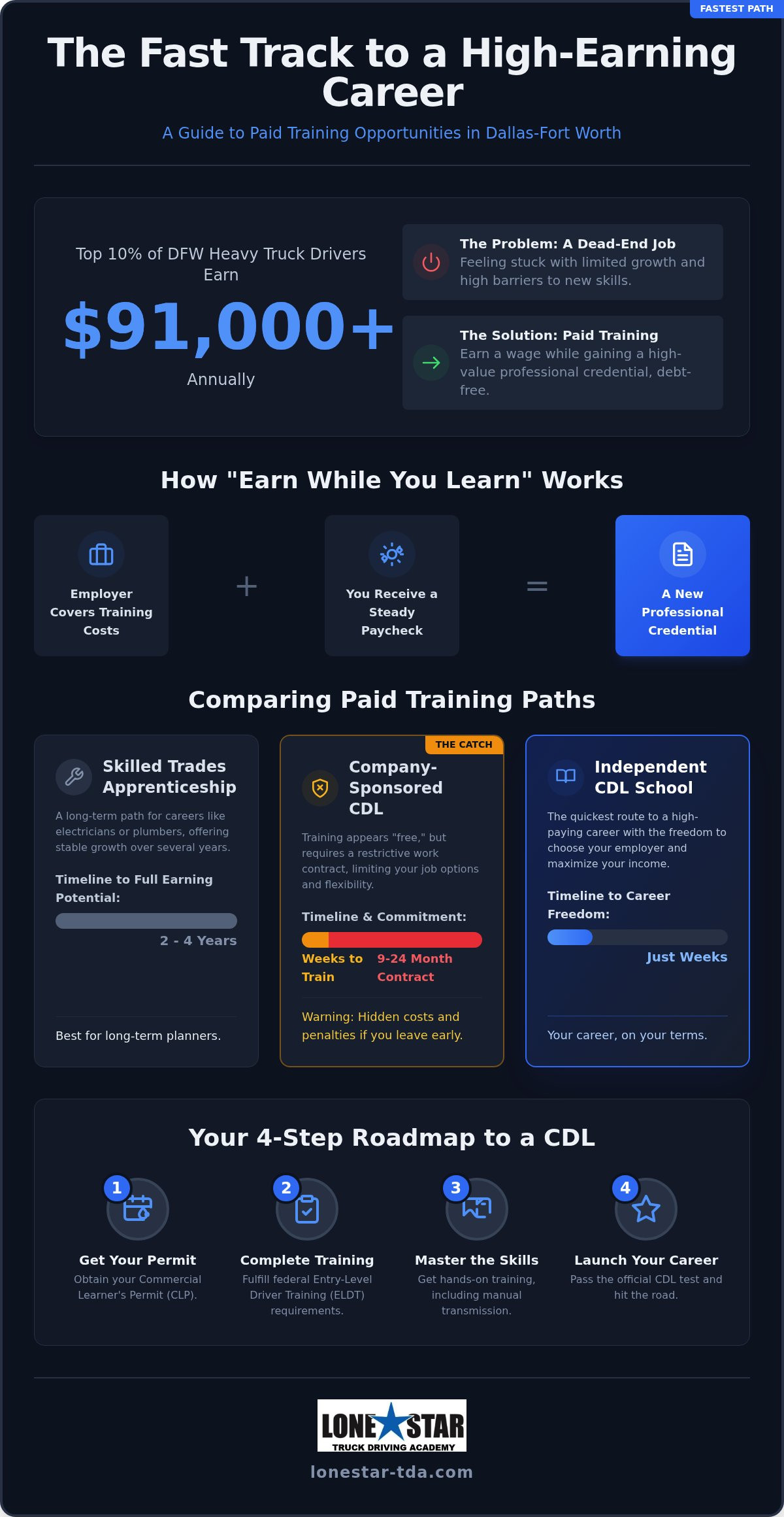
In the Dallas-Fort Worth area, the top 10% of heavy truck drivers earn over $91,000 annually, yet many people still think a four-year degree is the only path to that income level. It’s exhausting to feel stuck in a dead-end position while the Texas economy booms around you. You want a career with real growth, but a lack of upfront tuition often feels like a total dead end. This is why jobs with paid training are now the most popular entry point for new professionals in North Texas. At Lone Star Truck Driving Academy, we help students navigate these opportunities so they can trade a stagnant job for the freedom of the road.
Finding a path that pays you to gain a professional credential is a practical reality in the trucking industry. You’ll discover the best career paths that pay you to learn, with a focus on the fast-track world of Texas commercial driving. We’ll clear up the confusion between “free” and “paid” training and explain how work contracts often cover your costs. You will also learn the exact steps to get started in Texas, from your initial permit prep to mastering a manual transmission. This guide provides the real-world roadmap you need to move into a high-demand career without the burden of upfront debt.
Key Takeaways
- Learn how “earn while you learn” programs provide a steady paycheck while you master the technical skills needed for a new career.
- Compare different paths like apprenticeships and trucking jobs with paid training to find the best fit for your timeline and financial goals.
- Explore why the Dallas-Fort Worth area is the ideal location to launch a commercial driving career due to its massive logistics network.
- Master the essential first steps, including how to obtain your Commercial Learner’s Permit and meet federal training requirements.
- Find out how specialized skills like manual transmission operation and automatic restriction removal can significantly increase your professional value.
What Are Jobs with Paid Training and How Do They Work?
A job with paid training is a professional arrangement where an employer covers your tuition or certification costs while providing a regular wage during your learning period. This model effectively removes the massive financial barrier of traditional education. Instead of taking on student debt, you start earning from day one. It’s a strategic partnership; the company secures a skilled worker, and you gain a professional credential without the typical price tag. In the fast-moving 2026 economy, jobs with paid training have become the gold standard for those looking to switch careers without depleting their savings.
The process typically balances classroom theory with hands-on field experience. For example, many CDL training programs require students to master federal safety regulations and ELDT theory before they ever get behind the wheel. This structure ensures you understand the “why” behind the work before you practice the “how.” In North Texas, this model is peaking because industries in Dallas and Fort Worth are desperate for qualified professionals who can hit the ground running. By September 2026, the demand for skilled labor has reached a point where companies are willing to invest more than ever in their new recruits.
The Rise of On-the-Job Training (OJT) in Texas
Texas industries are leading a national shift away from four-year degree requirements. Employers in the DFW metroplex now prioritize mastery and practical ability over general academic history. On-the-job training is a career development method that allows you to gain specialized technical skills through direct workplace experience while receiving a full paycheck. This shift is particularly visible in Mansfield and Dallas, where infrastructure and logistics companies are expanding rapidly to meet 2026 demands. By focusing on OJT, these companies can train workers to meet their specific safety and operational standards from the very beginning.
Common Industries Offering Paid Training Paths
While many sectors use this model, three specific industries dominate the Texas market:
- Healthcare: Roles like Certified Nursing Assistants (CNAs) and phlebotomists often find employers willing to pay for certification in exchange for a work commitment.
- Construction and Skilled Trades: Electrical and plumbing apprenticeships offer long-term paths, though these typically require a multi-year commitment before you reach full journeyman status.
- Logistics and Transportation: This is the powerhouse of the DFW economy. It offers the fastest route to high wages through professional driving programs.
Unlike government-sponsored apprenticeships that can last four years, industry-specific vocational training is often much shorter. This makes it an ideal choice for working adults who need to increase their income quickly. By choosing a path like commercial driving, you can move from the classroom to a high-paying role in a matter of weeks rather than years.
Comparing Paid Training Options: Apprenticeships vs. CDL Schools
When searching for jobs with paid training, you’ll likely encounter two distinct paths: traditional trade apprenticeships and vocational training like CDL school. Apprenticeships in fields like electrical work or plumbing are excellent long-term careers, but they require a significant time investment. You might spend two to four years as an apprentice before reaching full earning potential. In contrast, commercial driving is a short-term vocational path that allows you to enter the workforce in a fraction of that time. Both options provide a way to master a craft while earning a wage, but the timeline to financial independence is where they differ most.
Company-sponsored CDL training is a common “paid” option where a carrier covers your tuition in exchange for a work contract. While this sounds like a win-win, it’s often a trap for the unwary. These contracts typically require you to drive for that specific company for 9 to 24 months. If you leave early for any reason, you’re usually required to pay back the full, non-discounted cost of the training immediately. This can limit your ability to move to a better-paying local job in Dallas or Fort Worth if a better opportunity arises before your contract is up.
The Hidden Costs of “Free” Training
The primary difference between “free” company training and attending a professional CDL academy is your level of freedom. Private training allows you to choose your employer based on the best pay and benefits rather than being tied to one carrier. It’s also vital to verify that any school you choose is listed on the official Training Provider Registry. This ensures your training meets federal ELDT standards, which is a mandatory requirement for all new drivers as of 2022.
- Tuition Reimbursement: Many carriers will pay you back for your school costs over time without locking you into a restrictive contract.
- Contractual Obligations: Leaving a company-sponsored program early can result in a debt of several thousand dollars.
- Job Choice: Private students often qualify for higher-paying specialized roles, such as flatbed or tanker work, right out of school.
Speed to Income: The 4-Week Advantage
In cities like Mansfield and Arlington, the speed at which you can start earning is a major factor for working adults. A plumbing apprentice might wait years for a journeyman’s wage, whereas a CDL student can move from the classroom to a full paycheck in just four weeks. This rapid transition is ideal for those who need to support a family while transitioning out of a dead-end job. If you’re unsure which path fits your goals, speak with a training advisor to get a clear picture of your options. Lone Star Truck Driving Academy focuses on getting you ready for the road with the skills that Dallas employers actually value, such as manual transmission mastery.
Why Trucking is the Top Choice for Paid Training in Texas
The Dallas-Fort Worth metroplex is the engine of the Texas economy. Because of this, jobs with paid training in the trucking industry are more abundant here than in almost any other region. While traditional apprenticeships in other trades might start with lower hourly wages, new commercial drivers in DFW enter a market where the median annual wage is $59,530. This immediate earning potential makes trucking a primary choice for those who need to improve their financial situation without waiting years for a raise. By September 2026, the demand for drivers has only intensified as distribution centers across North Texas continue to expand.
Versatility is another major advantage of this career. You aren’t limited to long-haul routes that keep you away from home. The DFW market offers a massive variety of local delivery, regional, and vocational driving roles. Whether you choose a Class A or Class B path, the 2026 regulatory environment requires all new drivers to complete an Entry-Level Driver Training (ELDT) program. This federal mandate ensures every driver on the road has met high safety standards before they begin their career. Mastering these requirements early makes you a far more attractive candidate to top-tier carriers.
Local Demand in Dallas, Mansfield, and Fort Worth
Major distribution centers in Dallas, Mansfield, and Fort Worth are constantly seeking new talent. Many of these companies offer paid orientation and tuition reimbursement to attract qualified candidates. If you’re looking for CDL training in Mansfield, you’re positioning yourself in the heart of this activity. This regional strength isn’t just limited to Texas. Our presence in Greensboro, NC, also highlights how these logistics hubs connect across the country, providing even more opportunities for those willing to travel regional routes.
Specialized Paths: Hot Shot and Class B
Not every professional driver wants to operate a 53-foot trailer. Some prefer the agility of hot shot driving. This often involves using a heavy-duty pickup truck and a flatbed trailer to move smaller, time-sensitive loads. Professional hot shot driver training is a popular choice for those with an entrepreneurial spirit who want to operate their own equipment. It allows for a more flexible lifestyle while still tapping into the high-demand logistics market.
Class B roles are another excellent option for staying local. These jobs often involve driving vocational vehicles like dump trucks or delivery box trucks. To unlock any of these high-paying jobs with paid training, your first step is obtaining your Commercial Learner’s Permit (CLP). Showing an employer you already have your permit proves you’re serious and ready for their paid orientation programs. We focus on helping you clear this hurdle quickly so you can start earning as soon as possible.
How to Qualify for the Best Paid Training Jobs
Securing a spot in the most competitive jobs with paid training requires more than just filling out an application. You need to present yourself as a low-risk, high-reward candidate. Most carriers in the Dallas-Fort Worth area look for individuals who have already cleared the initial hurdles of the licensing process. By handling your prerequisites before you apply, you demonstrate a level of professionalism that sets you apart from the hundreds of other applicants seeking a “free” ride. This preparation is the key to landing a role with a company that offers high wages and quality equipment.
To position yourself for the best opportunities in North Texas, follow these essential steps:
- Research Industry Standards: Ensure you meet the basic requirements, including being at least 18 years old for Texas driving (21 for interstate) and passing a background check.
- Pass the DOT Physical: You must be medically cleared by a certified examiner. Expect this exam to cost between $80 and $120.
- Obtain Your CLP: The Texas Commercial Learner’s Permit fee is $25. Having this in hand is the single best way to prove you are ready for hire.
- Complete ELDT Theory: Federal law requires this certification before you can take your skills test. Completing this early shows employers you are serious.
- Master Manual Shifting: Learning on a manual transmission prevents the “Automatic Only” restriction on your license, making you eligible for 40% more jobs.
The Power of the Permit
Most companies offering jobs with paid training won’t even schedule an interview until you have your permit. They don’t want to gamble on whether you can pass the written exams at the Texas DPS. Utilizing professional CDL permit prep ensures you walk into the DPS with confidence. A common mistake many DFW residents make is failing to bring the correct residency documents or failing the “Combination” section of the test. Clearing this hurdle early makes you “shovel-ready” for any recruiter.
Removing Barriers to Employment
Many “free” training programs only use automatic trucks because they are easier to teach. However, this leaves you with a restriction that prevents you from driving manual rigs. Our automatic restriction removal service is specifically designed to fix this. In the Texas oil fields and heavy construction sectors around Fort Worth, manual transmission skills remain a high-value asset. Adding a Tanker or Hazmat endorsement to your license makes you eligible for specialized roles that often feature the highest pay scales in the industry.
Start your professional driving journey here
Starting Your Journey with Lone Star Truck Driving Academy
Choosing the right school is the most critical decision you’ll make after deciding to pursue jobs with paid training. At Lone Star Truck Driving Academy, we don’t just prepare you for a test; we prepare you for a career. Our instructors are seasoned professionals who bring millions of miles of over-the-road experience to the training range. This mentorship provides you with the practical insights that a textbook simply cannot offer, ensuring you’re ready for the realities of the industry from your very first day on the job.
We understand that most of our students are working adults with existing responsibilities. That’s why we offer flexible weekend classes that allow you to transition into a new career without losing your current source of income. This flexibility is a cornerstone of our approach, providing a steady path toward your goals while maintaining your financial stability. Whether you are in Mansfield, Dallas, or Fort Worth, our goal is to provide an environment where safety and professionalism are the top priorities.
One of the biggest advantages of training with us is our authorized third-party testing. Instead of waiting weeks for an appointment and dealing with long lines at the Texas DPS, you can test on the same equipment and at the same facility where you trained. This significantly reduces the stress of the skills test and helps you get your CDL faster. By removing these administrative hurdles, we help you move into the workforce and start qualifying for tuition reimbursement programs as quickly as possible.
Hands-On Training for Real-World Success
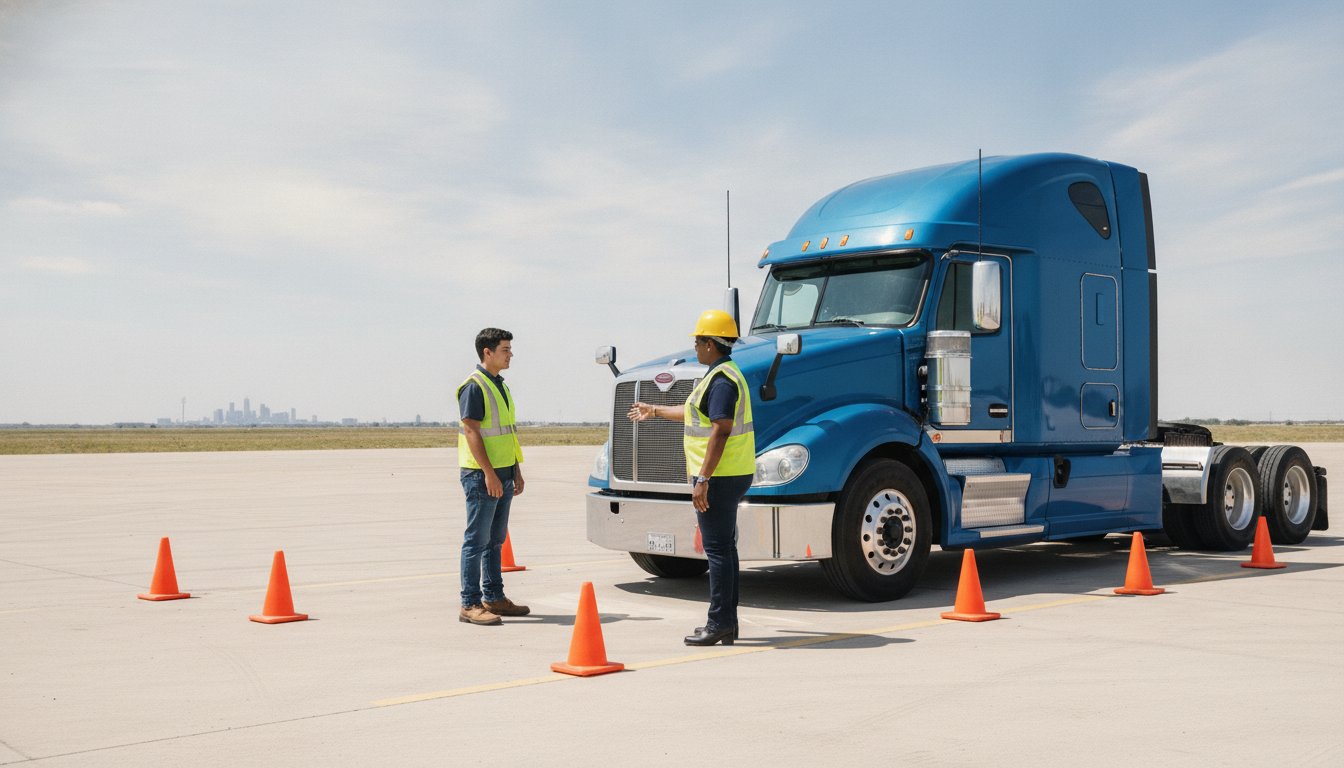
Classroom theory is a necessary foundation, but the real learning happens behind the wheel. We prioritize extensive range and road time so you can master backing maneuvers and city driving before you ever face a recruiter. Preparing for the specific challenges of DFW traffic and the busy Texas highway system requires a steady hand and professional guidance. For those who already have their license but have been out of the seat for a while, our CDL refresher courses are the perfect way to polish your skills and return to the industry with confidence.
Your Next Steps in Dallas or Greensboro
Getting started is a straightforward process. We invite you to contact us for a tour of our facilities in Mansfield, Texas, or Greensboro, North Carolina. Seeing the equipment and meeting the instructors can help you visualize your future on the road. When you come in for your first consultation, bring your driver’s license and any questions you have about the permit process. We’ll help you map out a timeline that fits your life and gets you ready for the high-demand jobs with paid training available in today’s market.
Contact Lone Star Truck Driving Academy today
Take the Next Step Toward Your Professional Future
Transitioning to a high-demand career in North Texas doesn’t have to mean taking on massive debt or leaving your current job immediately. By understanding how jobs with paid training function, you can leverage employer tuition reimbursement and paid orientation to build a stable future. Whether you are aiming for Class A long-haul or local Class B roles, the DFW logistics hub offers unmatched opportunities for those who arrive prepared.
At Lone Star Truck Driving Academy, we provide the tools you need to succeed. Our team includes expert instructors with real-world experience who understand what it takes to thrive on Texas roads. With flexible weekend CDL classes and authorized on-site third-party testing, we make it possible for working adults to reach their goals on their own terms.
You have the roadmap and the industry knowledge to make an informed choice. It’s time to put your career in gear and join the thousands of professionals moving the Texas economy forward.
Frequently Asked Questions
What are the best entry-level jobs with paid training in Texas?
Commercial driving is arguably the best because of the high DFW median salary of $59,530 and fast entry into the workforce. Other roles include healthcare assistants and skilled trades like plumbing. However, trucking offers a unique orientation phase where carriers pay you while you finish your road training. This makes logistics the top choice for rapid income growth in North Texas for those seeking an earn-while-you-learn career path.
Do I need a college degree to get a job with paid training?
No, you don’t need a four-year degree to qualify for these programs. Most industries offering jobs with paid training, especially transportation and logistics, prioritize technical skills and safety certifications over academic history. In Texas, having a clean driving record and a high school diploma or GED is usually sufficient to start. Employers value your ability to handle equipment and follow federal safety regulations above all else in this market.
How much can I earn while in a paid training program for trucking?
Pay varies by carrier, but most drivers earn a weekly stipend or hourly wage during their initial orientation and over-the-road training. While you won’t reach the top 10% DFW wage of $91,990 immediately, you’ll receive a steady paycheck while mastering your skills. This income helps cover living expenses as you transition into full-time status. It’s a practical way to support your family while gaining a professional credential in Texas.
What is the difference between an apprenticeship and on-the-job training?
Apprenticeships are typically long-term commitments, often lasting two to four years, focused on mastering a complex trade like electrical work. On-the-job training is generally shorter and focused on specific operational tasks. In the trucking industry, this often takes the form of a few weeks of intensive skills development followed by a paid orientation. Both models allow you to earn a wage while you build your professional expertise in the Dallas and Fort Worth regions.
Can I get paid training for a CDL without signing a long-term contract?
Yes, you can avoid restrictive contracts by choosing private training first. While some “free” schools require a 12 to 24-month commitment, attending a school like Lone Star Truck Driving Academy allows you to shop for employers who offer tuition reimbursement. This approach gives you the freedom to pick the best-paying jobs with paid training in the DFW area without being legally tied to a single carrier for years.
How long does it take to finish a paid training program in the DFW area?
Most commercial driving programs in the Dallas-Fort Worth metroplex take about four weeks to complete. This includes your ELDT theory certification and hands-on range time. Once you pass your skills test, you typically enter a company’s paid orientation phase, which can last another one to three weeks. Compared to traditional trades, this is the fastest way to move from a student status to a professional paycheck in North Texas and get on the road.
What happens if I fail my training program? Do I have to pay the money back?
If you are in a company-sponsored program, failing often results in a debt for the prorated cost of the training. This is a significant risk of the “free” school model. However, when you invest in your own education at an academy, you have the flexibility to retake exams and master the skills without a carrier demanding immediate repayment. It’s always wise to read the fine print of any work-for-training contract you sign.
Are there age requirements for jobs with paid training in transportation?
You must be at least 18 years old to hold a CDL and drive commercially within the state of Texas. If you want to drive across state lines, federal law requires you to be at least 21. Most high-paying programs that involve long-haul routes prefer candidates who are 21 or older. However, there are many local delivery and vocational roles in Mansfield and Fort Worth available for younger drivers starting their professional careers.
Article by
Lone Star Truck Driving Academy Training Team
Lone Star Truck Driving Academy provides CDL training for students throughout Texas and North Carolina. Our training team specializes in Class A CDL training, Class B CDL training, CDL refresher programs, automatic restriction removal, third-party testing support, and workforce development partnerships designed to help students build successful careers in the transportation industry.
Training Information Notice
The information provided in this article is for general educational purposes only. Program availability, tuition, licensing requirements, testing procedures, endorsement requirements, and regulatory standards may change over time. Prospective students should contact Lone Star Truck Driving Academy directly to verify current program details, admissions requirements, and state-specific CDL regulations.